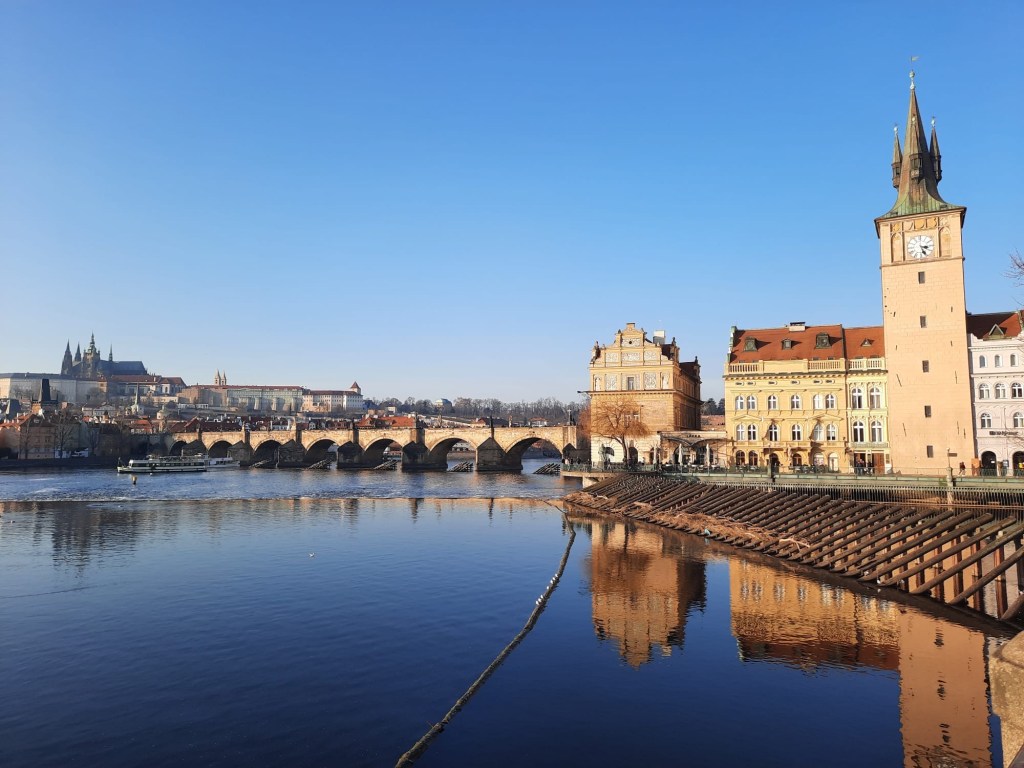
In February, Alex and I spent two days in Berlin followed by two days in Prague and it was an absolutely fabulous holiday. I’ve shared what we got up to in Berlin and now it is the turn of Prague. Prague is a well-loved holiday destination for people in the UK and across the world, famed for its architecture and it has been on my bucket list for a while. It was even nicer than I imagined! Carry on reading to find out everything that we crammed in to 48 hours in Prague!
When is the best time to go?
Many people head to Prague over the summer season and that is the very reason not to go. Whilst still bustling in February, we found that the city was much easier to navigate without it being so busy you had to squeeze around people. I saw a picture in one of museums of the famous Charles Bridge in the summer and it was heaving with people whereas, we managed to walk across with ease each time. It still retains the atmosphere but, is a much nicer experience. This is a fabulous city and it would be a shame to be so busy that it hampers your experience. Plus, it’s cheaper in February!
Getting there
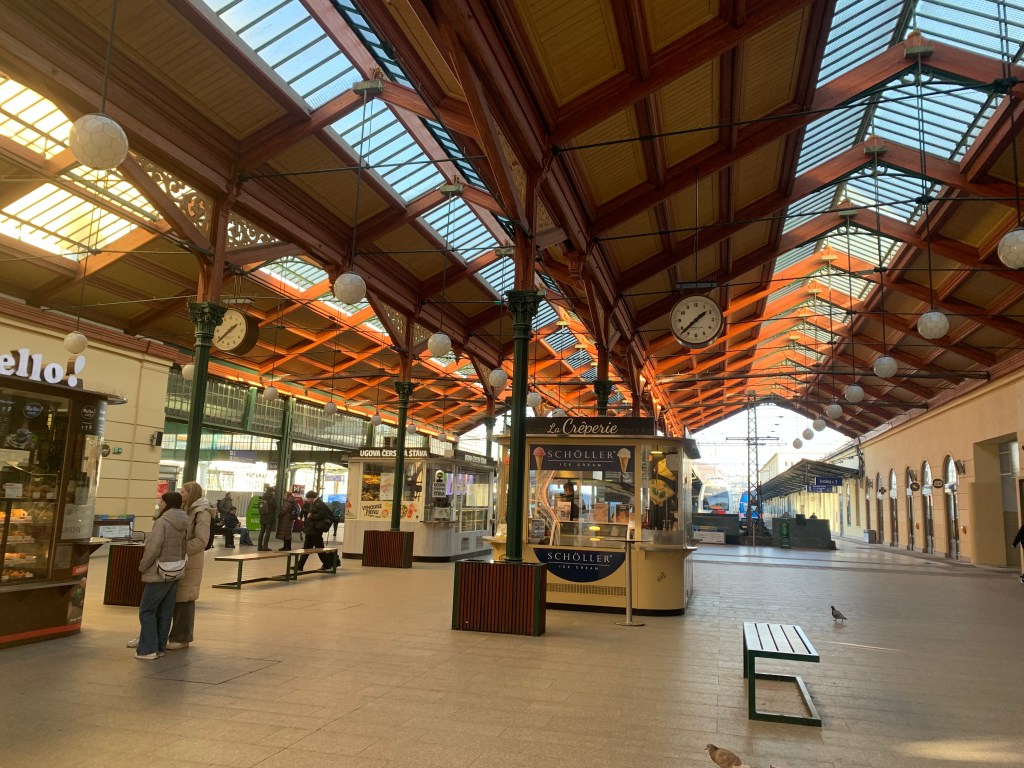
As I said above, we travelled from Berlin to Prague and this was very easy to do. We boarded the train at Berlin Hauptbahnhof bound for Praha Hlavni Nadrazi (Prague’s main station) which took around 4 hours and cost approximately £25 each. We were on a EC (EuroCity) train and my main complaint would be that seats were double-booked or just didn’t exist. Alex was supposed to be in seat 108 which just wasn’t there. Despite standing for the first hour though, there are great views outside the window to keep you entertained and the four hours passed rather quickly. The best place to look for train travel information is the blog, The Man in Seat 61 which holds all the essential information on train companies, prices etc.
If arriving by plane, Prague Vaclav Havel Airport is located outside of the city and therefore, I would recommend getting a FlixBus into the city. This costs several pounds and takes only 35 minutes. Florenc Bus Station is in a central location in the city so is a great place to start your trip. Other bus services are available with the RegioJet though these do take slightly longer. We opted for the FlixBus back to the airport for our departure and this was smooth sailing.
Where to stay
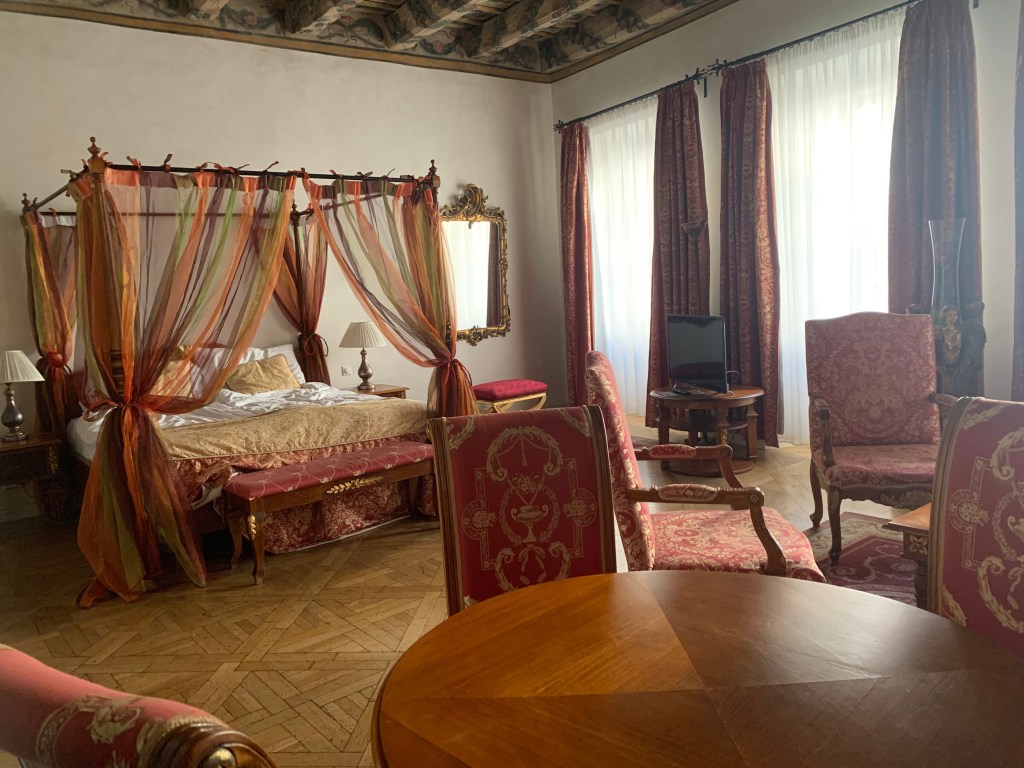
Hotel Residence Bijou de Prague
Located just a stones throw from Prague Castle was our hotel, Hotel Residence Bijou de Prague. The styling of the hotel is quite unusual as they go for a very regal style which I thought was very cool! Our room had a seating area, a dining table, a small kitchenette, a four-poster bed and a ensuite with a bath – what more could you as for! The rooms were clean and well manicured. The price was also very reasonable for the location and cost us around £50 per night. I highly recommend going out of season for the best deals.
Places to Eat and Drink
Pork’s
One the first night, we ate at Pork’s which was a very popular restaurant. We queued for a short while to enter but, boy was it worth it. Pork’s is, as you can imagine, a pork restaurant; Pork knuckle is probably the second most popular dish on a menu in Prague behind goulash. Alex opted for the knuckle whilst I had the pulled pork in bread with crusty onions and mustard etc. The portions were generous, the service was great and the food was absolutely delicious. The staff were friendly and very accommodating of my allergy. It was just a great experience on the whole. This cost us just under £40 which also included two drinks each – good value too!
U Glaubicu
On the second night, goulash was our aim so we headed to U Glaubicu which seemed to have pretty good reviews. This was cheap and cheerful. I ordered the goulash which is served in a bread bowl. The traditional pub style setting was lovely and again the service was very quick and efficient. We didn’t stick around here as we did with Pork’s for a second drink and I did prefer Pork’s if I had to pick one however, I would still recommend it. For just over £25 for two meals, one alcoholic drink and one non-alcoholic, you can’t really go wrong.
Sightseeing
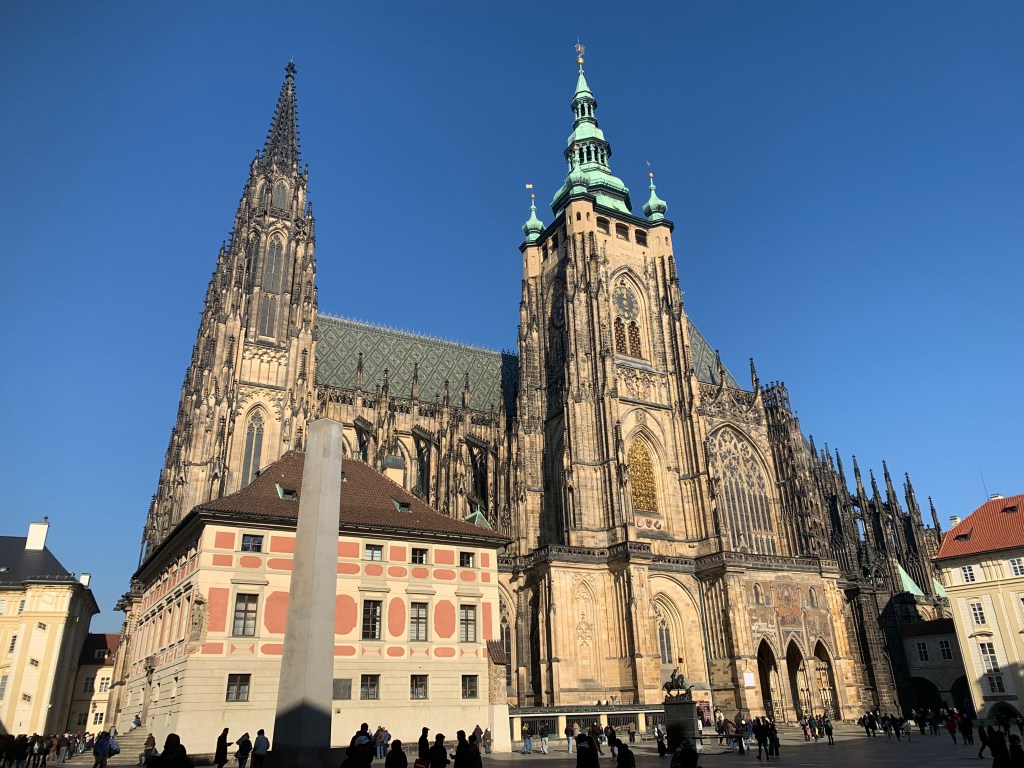
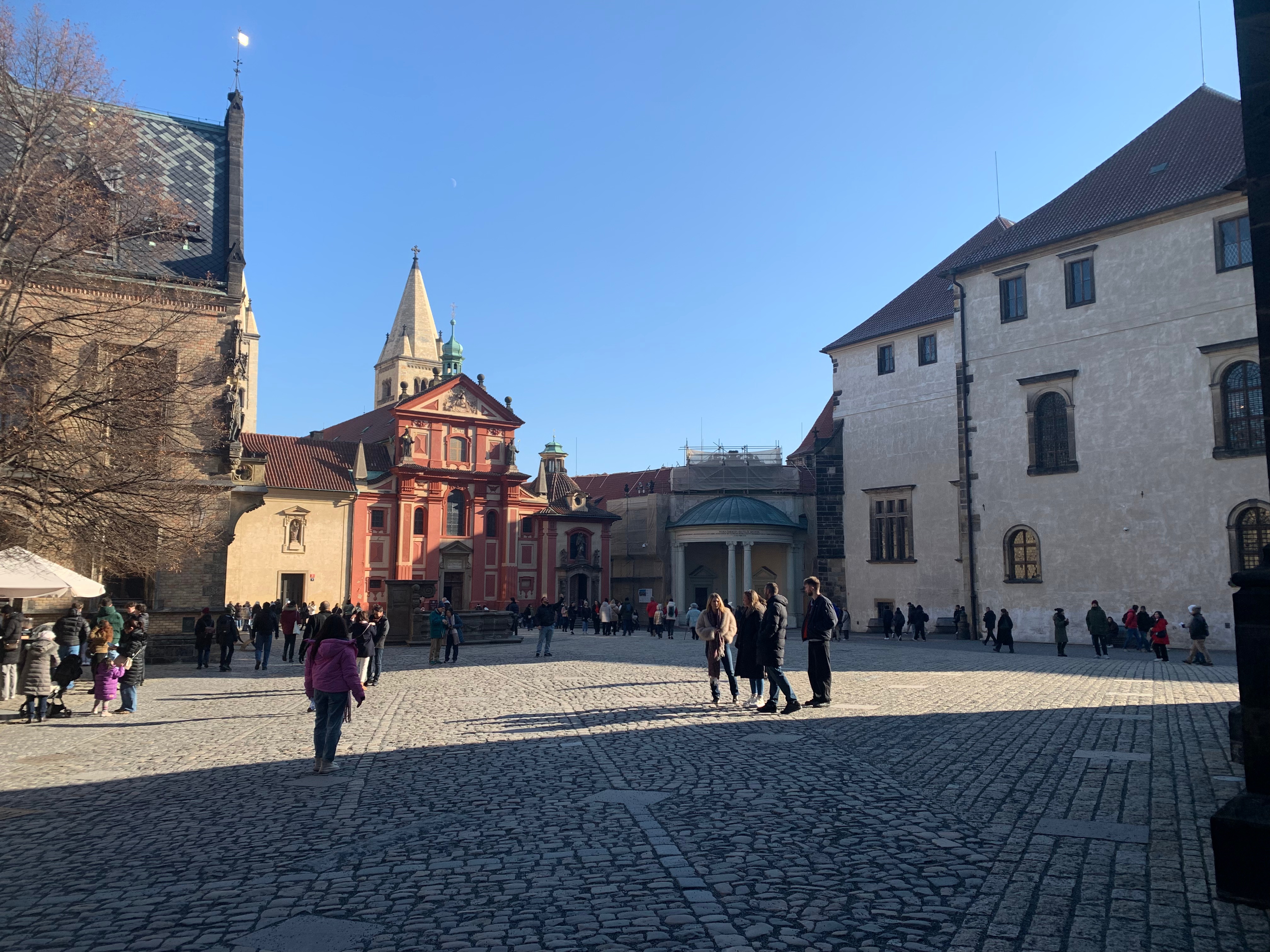
Prague Castle
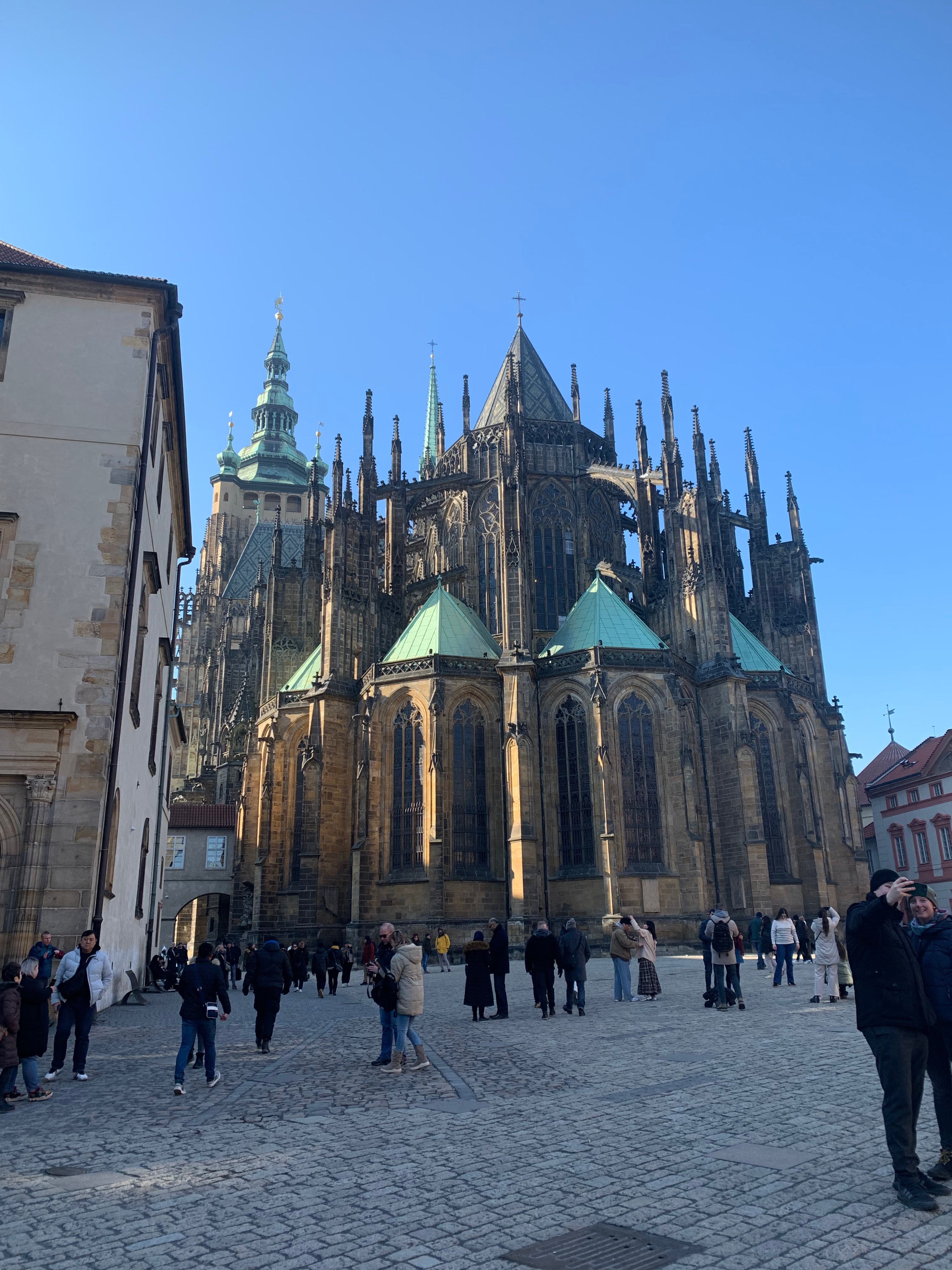
Given our accommodation’s closeness, Prague Castle wad a good place to start. It is the a large complex that is the residence and workplace of the president of Czech Republic and has a great vantage point looking across the city. There are many different sights to see within the complex including the St Vitus Cathedral, Basilica of St George as well as the gardens and museums. Different areas of the castle require tickets. You can walk around the main complex free of charge which is what we did. However, tickets for the ‘main circuit’ including the cathedral, basilica, Golden Lane and the Old Royal Palace costs 450cz which is approximately £15 at time of writing.
Prague Old Town Square
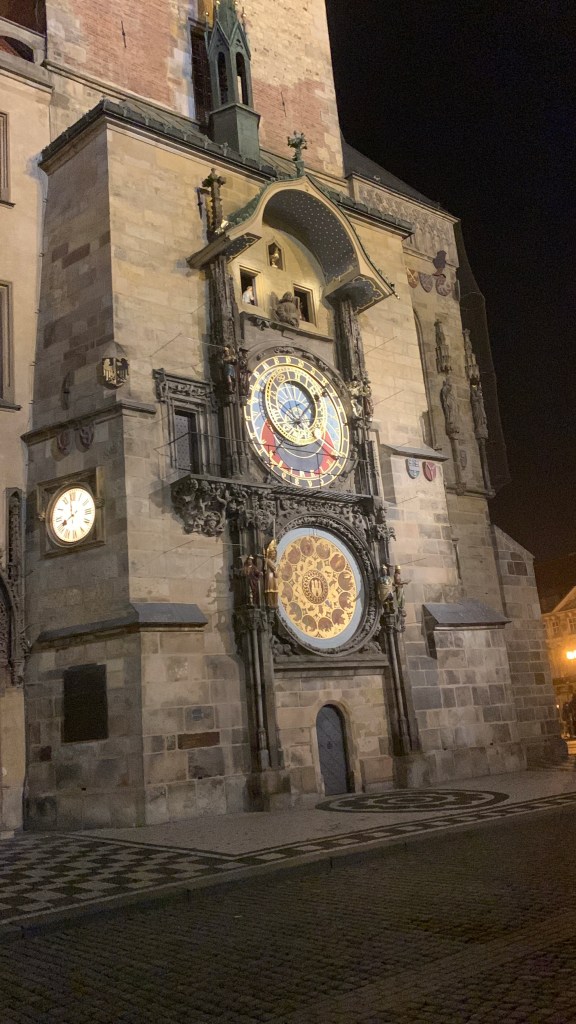
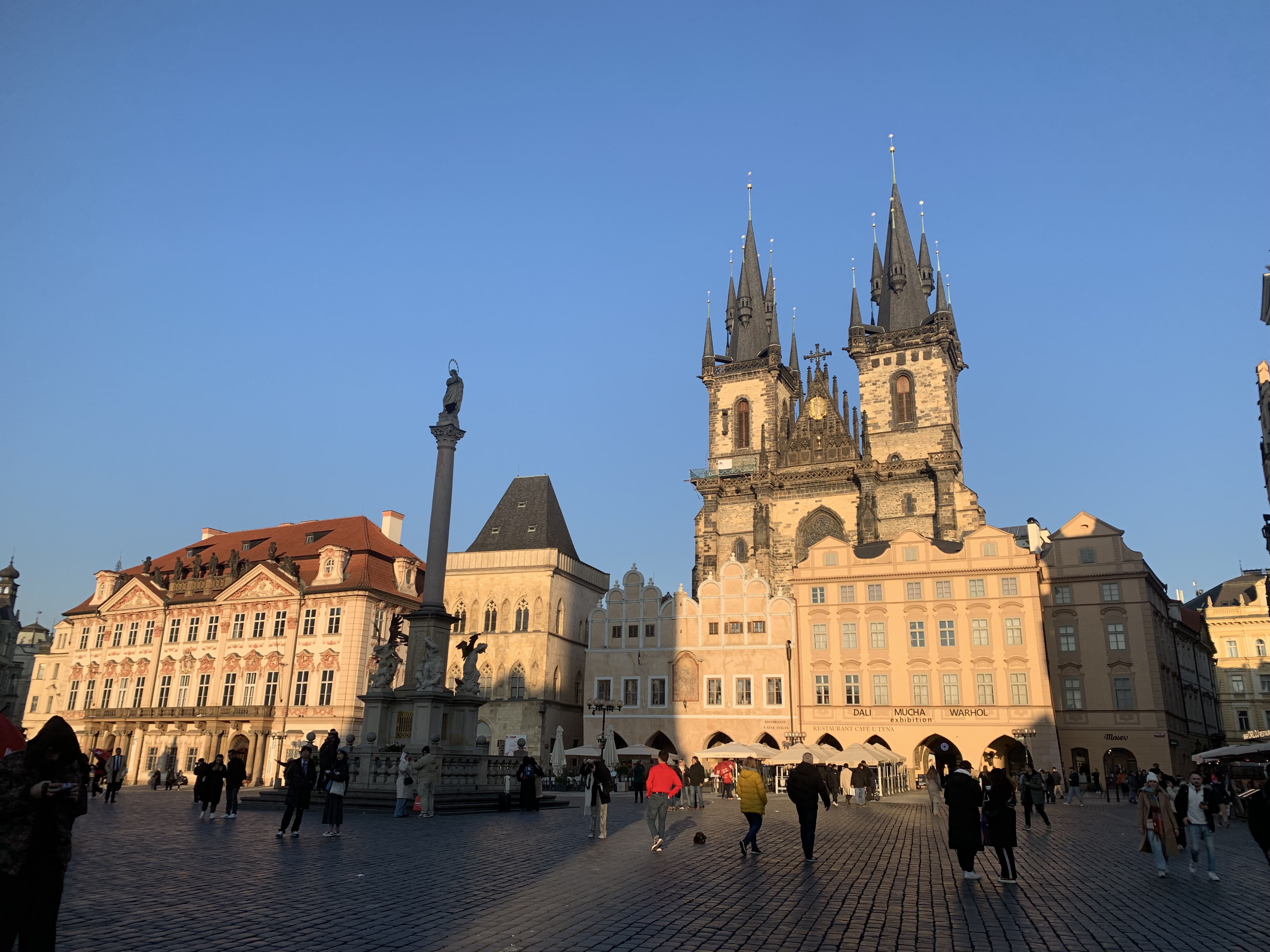
Prague Old Town Square is the oldest square in the city, as it was constructed in the 12th century. It is home to the Old Town Hall and the Baroque Church of St Nicholas, and the architecture is stunning. The square is also surrounded by restaurants and bars so we spent an evening having a drink here. Whilst there, we managed to see the astronomical clock strike the hour. This sight was actually ranked as one of the most disappointing tourists spots in Europe however, I think that’s a little harsh. Let’s not forget that the clock dates back to the 15th century and involves some pretty intricate construction. Don’t get me wrong, I personally wouldn’t stand and wait for half an hour to see it chime but, definitely worth a short wait.
Just around the corner from the clock, on the floor beside the Old Town Hall Tower are 27 crosses which are memorials to the 27 Czech lords that were executed there in 1621.
Jewish District
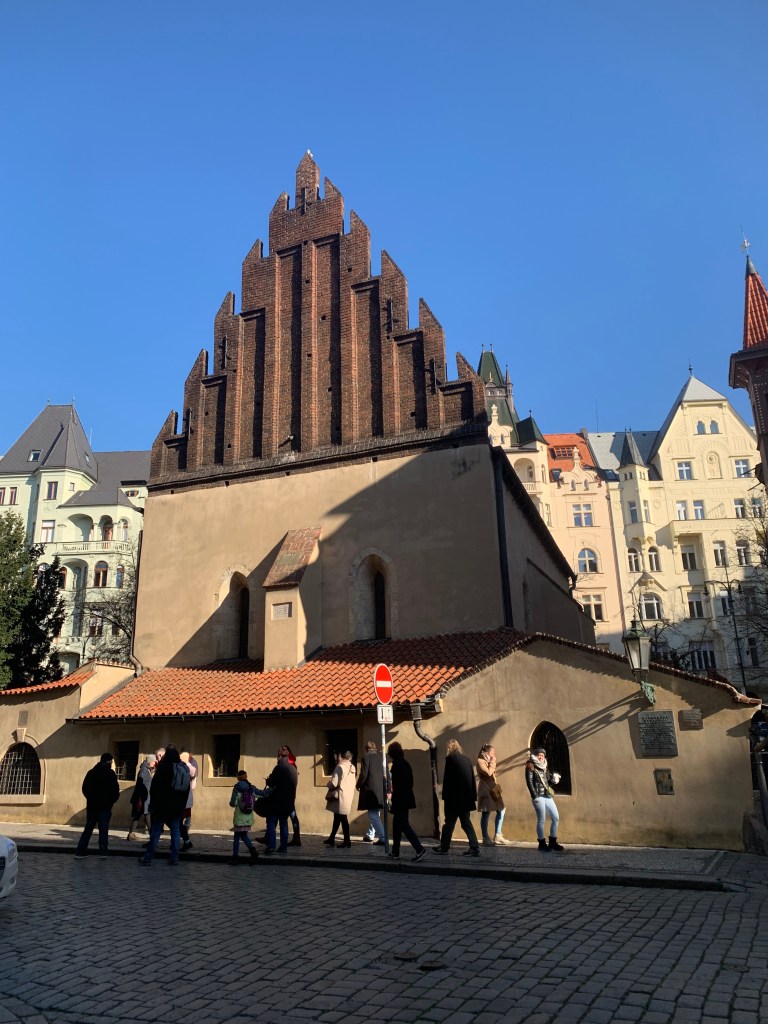
Just a short walk from the Old Town Square is Prague’s Jewish Quarter, a UNESCO World Heritage Site since 1991. Wandering down the old cobbled streets, passing medieval Synagogues and cemeteries, Jewish shops and cafes, you really get to appreciate the 1000 year history of Jews in Prague.
One worthwhile sight is the Old-New Synagogue, built in 1270, which is refuted as being the oldest functioning Synagogue in all of Europe. It is also home to the famous Prague myth of Golem – legend has it that the clay beast, brought to life to protect the Jewish Community, turned and started to destroy the city. As such Rabbi Loew shut Golem to rest in the attic of the Synagogue, where it apparently still lies today.
Karluv most/Charles Bridge
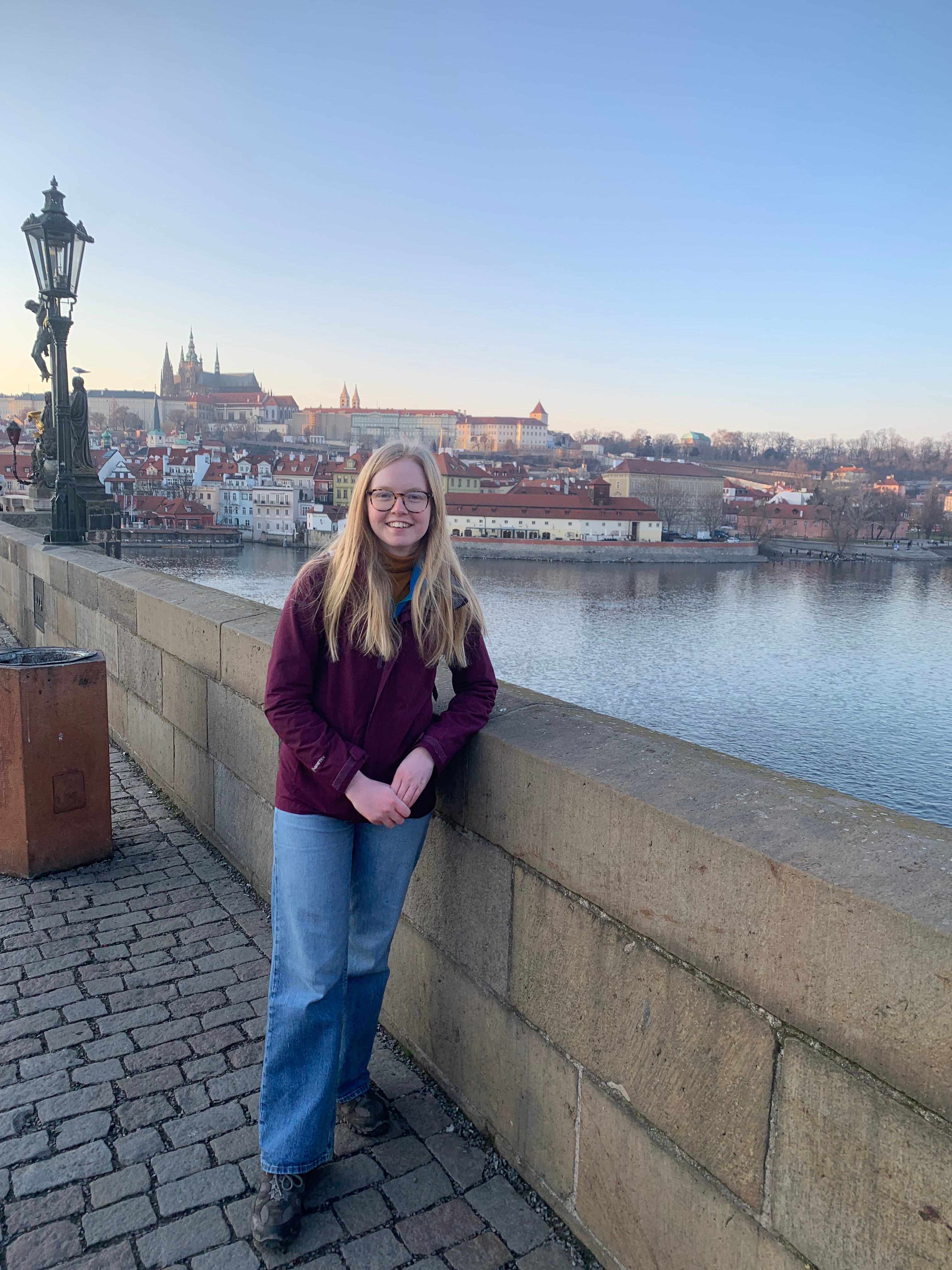
Perhaps one of the most famous landmarks in Prague is the Charles Bridge. Construction of the bridge began in 1357 and was finished in the 15th century. Initially, this bridge was the only way to cross the Vltava river until much later in the 1840s which meant that the construction helped Prague establish itself as a key trade route between Eastern and Western Europe. There are 30 baroque statues across the bridge which represent the patron saints of the 1600 and 1700s as these were later additions to the structure. Tourists crossing the bridge often touch the statue of St. John of Nepomuk as this is thought to be a symbol of good luck. You will probably cross the bridge many times throughout the duration of your trip.
Memorial of the Victims of Communism
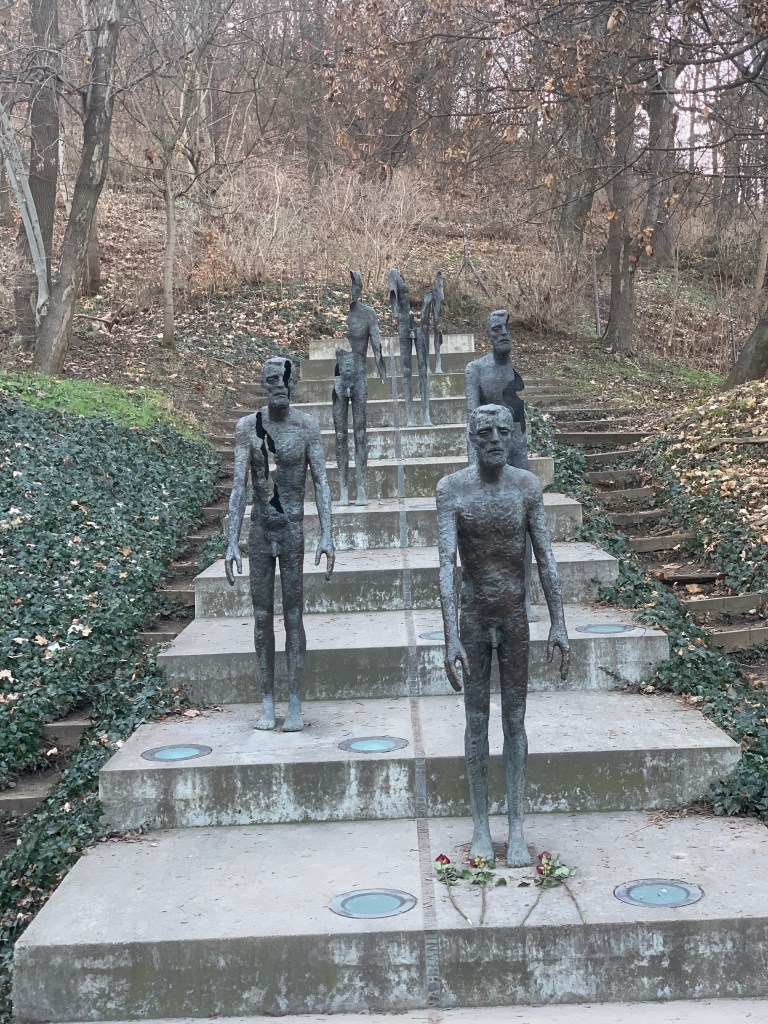
The Memorial of the Victims of Communism, as the name suggests, remembers the victims of the communist regime in Czechoslovakia. It is quite a striking and haunting memorial which depicts gaunt figures descending the stairs. I think it is important to learn about the history of a place when you visit which is why we decided to head to the next spot on this list…
Museum of Communism
Whilst Prague is undoubtedly a beautiful city, it has a dark, recent history that we wanted to learn more about. We visited the Museum of Communism to learn more about Czechoslovakia, as it was then named, and the oppressive rule over the Czech people whilst under dictatorship. I highly recommend this museum as it went through the history of the country chronologically and contextualised it within wider events in the world. It was interesting to learn more about how Czechoslovakia was taken under Hitler’s control and then as a Soviet ‘satellite state’ until the Velvet Revolution. It is rare that a museum holds my attention enough to read every single information board but, this one did.
Hanging Man
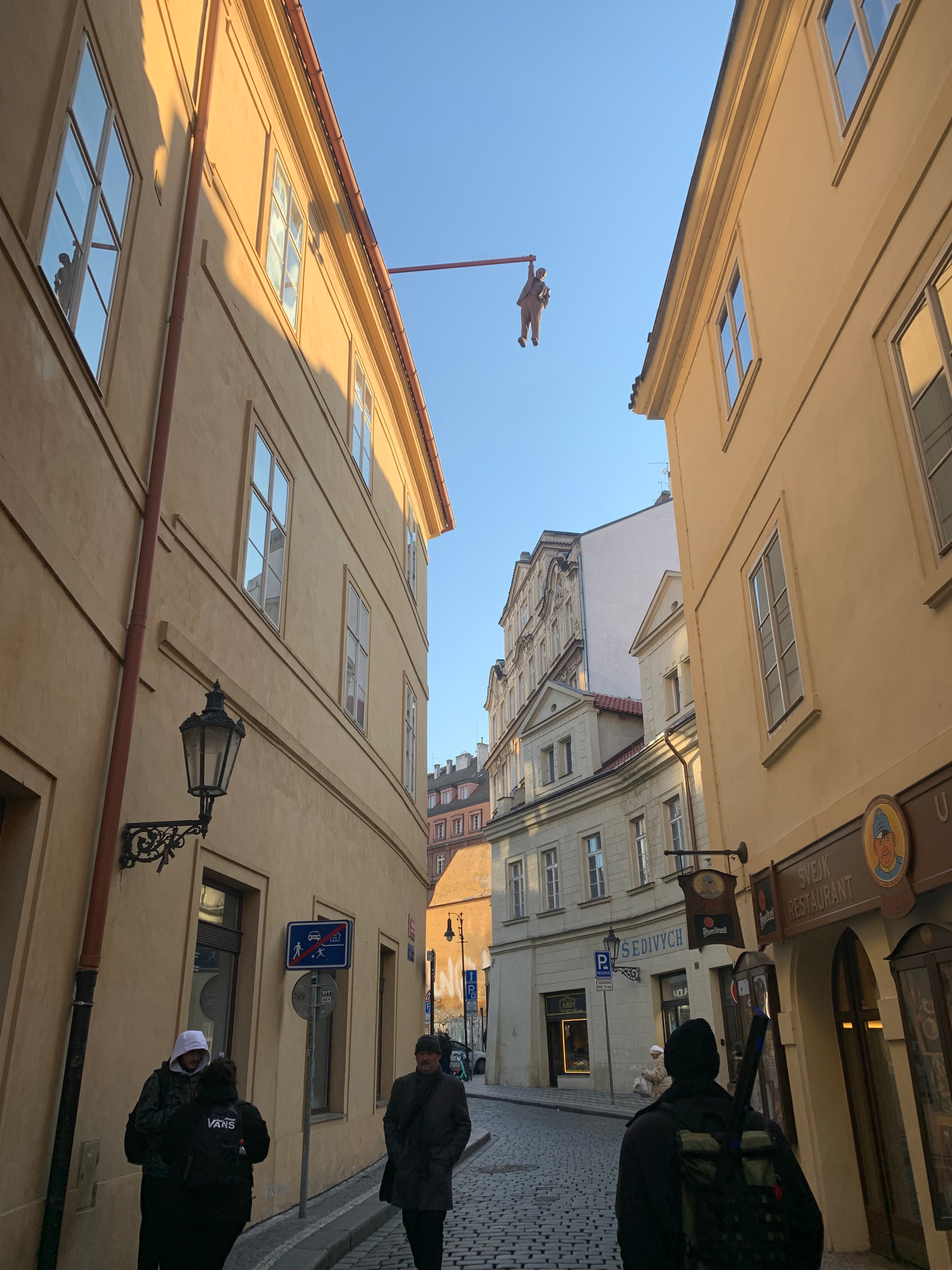
I didn’t know too much about this until we walked around a corner and Alex said “look up”. The hanging man is a statue of Sigmund Freud suspended off the end of a building. It was created by Czech sculptor David Černý. Don’t forget to look up!
Yellow Penguins (Museum Kampa)
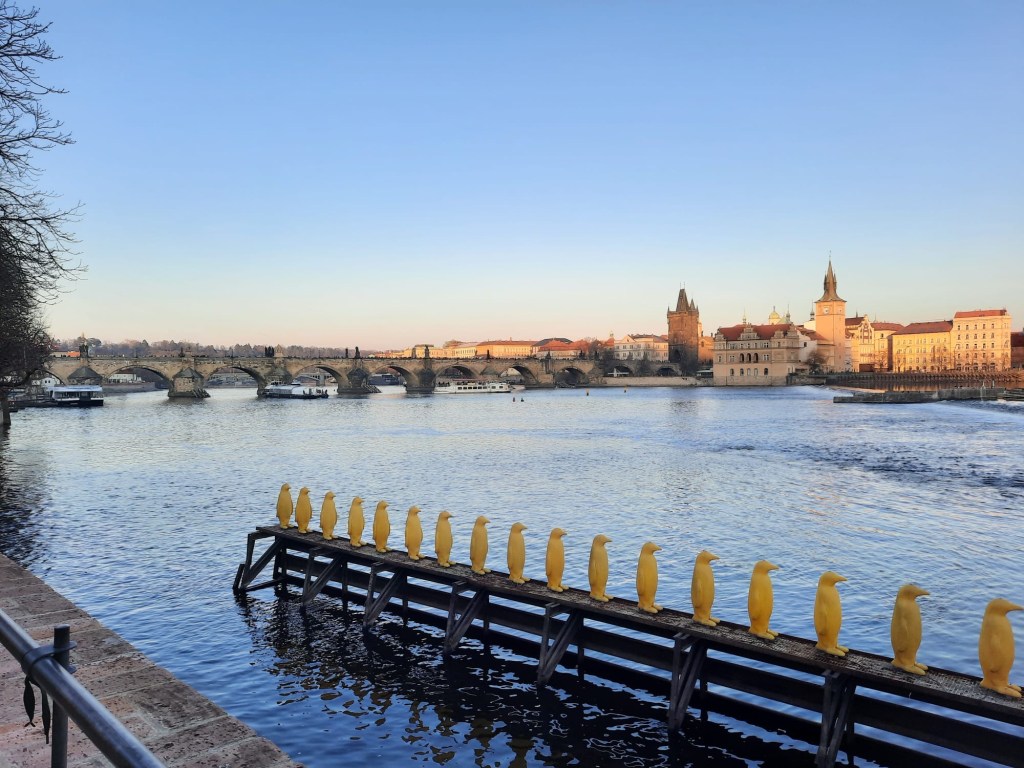
The next slightly unusual statues in Prague are the yellow penguins. Alongside the river near Museum Kampa are 34 yellow penguins that are a fun addition to the landscape. More than that though, the statues were designed as a reminder of the dangers of climate change and plastic consumption. The penguins are made from recycled bottles. You may also be able to spot these from Charles Bridge and they’re lit up in the evening.
You’ll also see another of David Černý’s statues nearby, ‘Babies’ which is hard to miss.
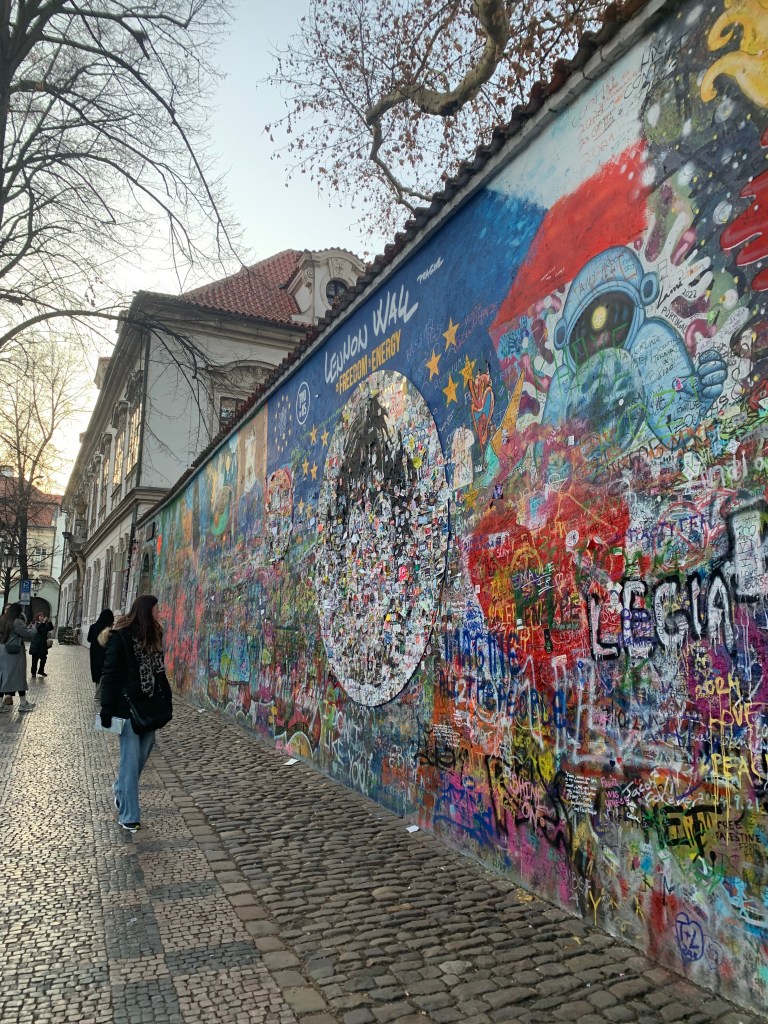
John Lennon Peace Wall
After John Lennon was murdered in 1980, an unknown artist created a mural of him on a wall in Prague. It afterwards became a legal graffiti wall allowing people to express themselves after communism covering topics such as climate change. This was the original however, other John Lennon walls have now cropped up around the world for example in Hong Kong.
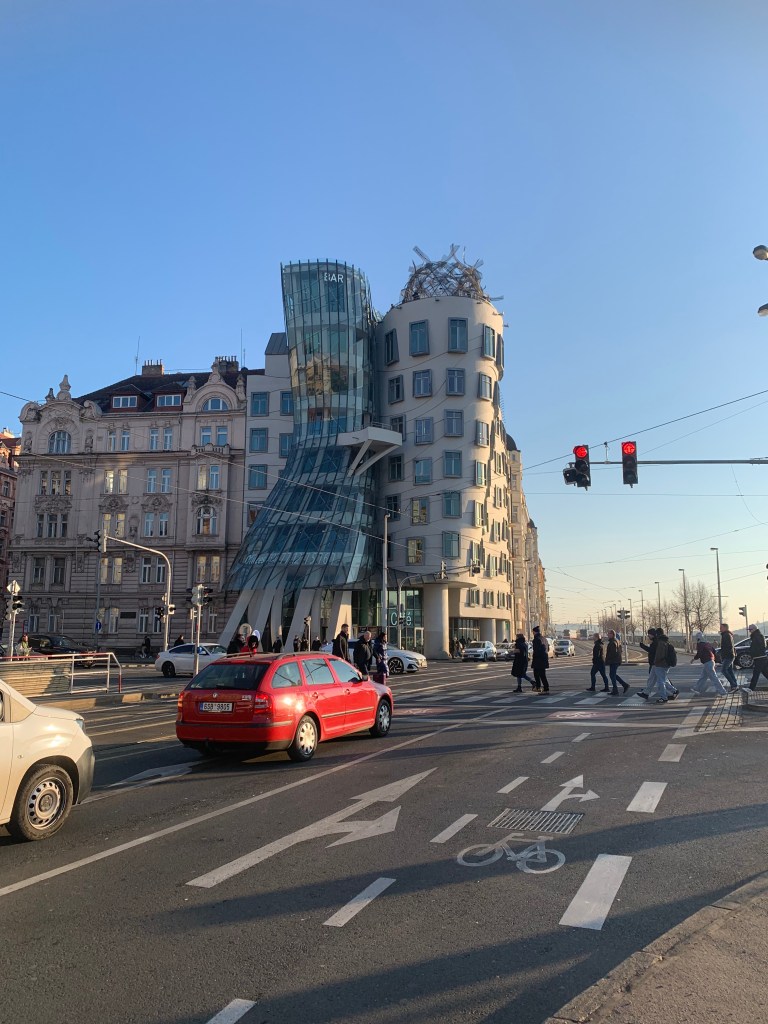
Dancing House
One of the more modern sights on this list, the Dancing House, was designed by a Croatian-Czech architect in the mid 1990s. The ‘dancing’ shape is made by 99 concrete panels, all of which are different shapes and dimensions. I really enjoyed walking here as you get to pass alongside the river and see a slightly different area of the city too.
Viewpoints
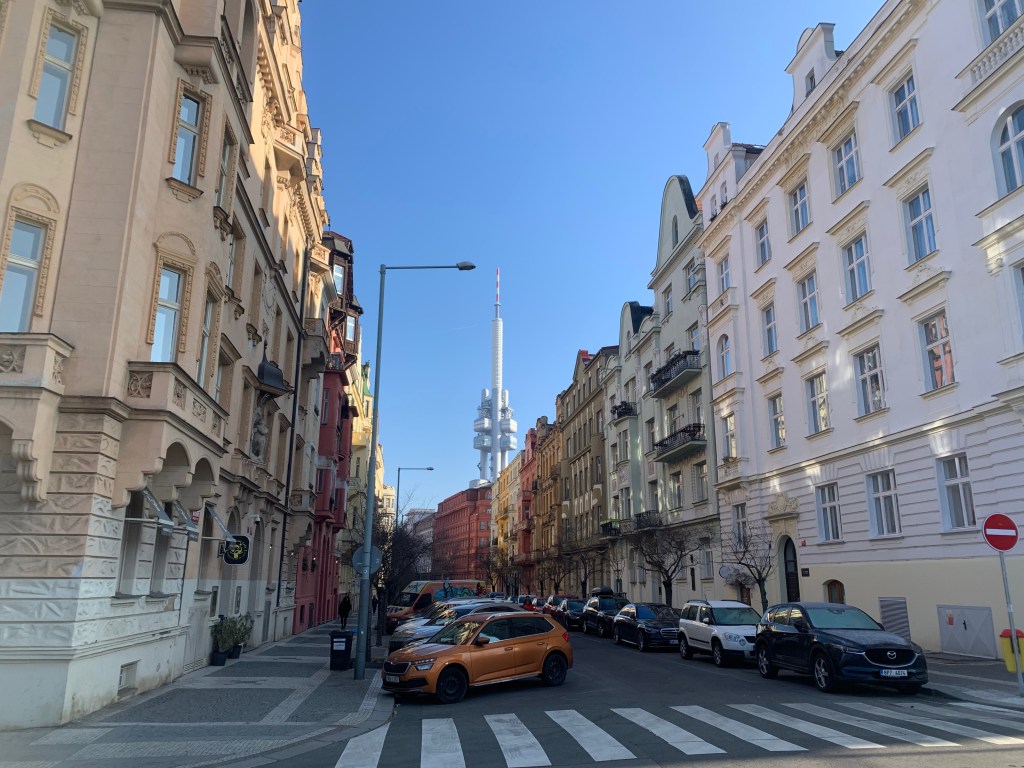
Zizkov Television Tower
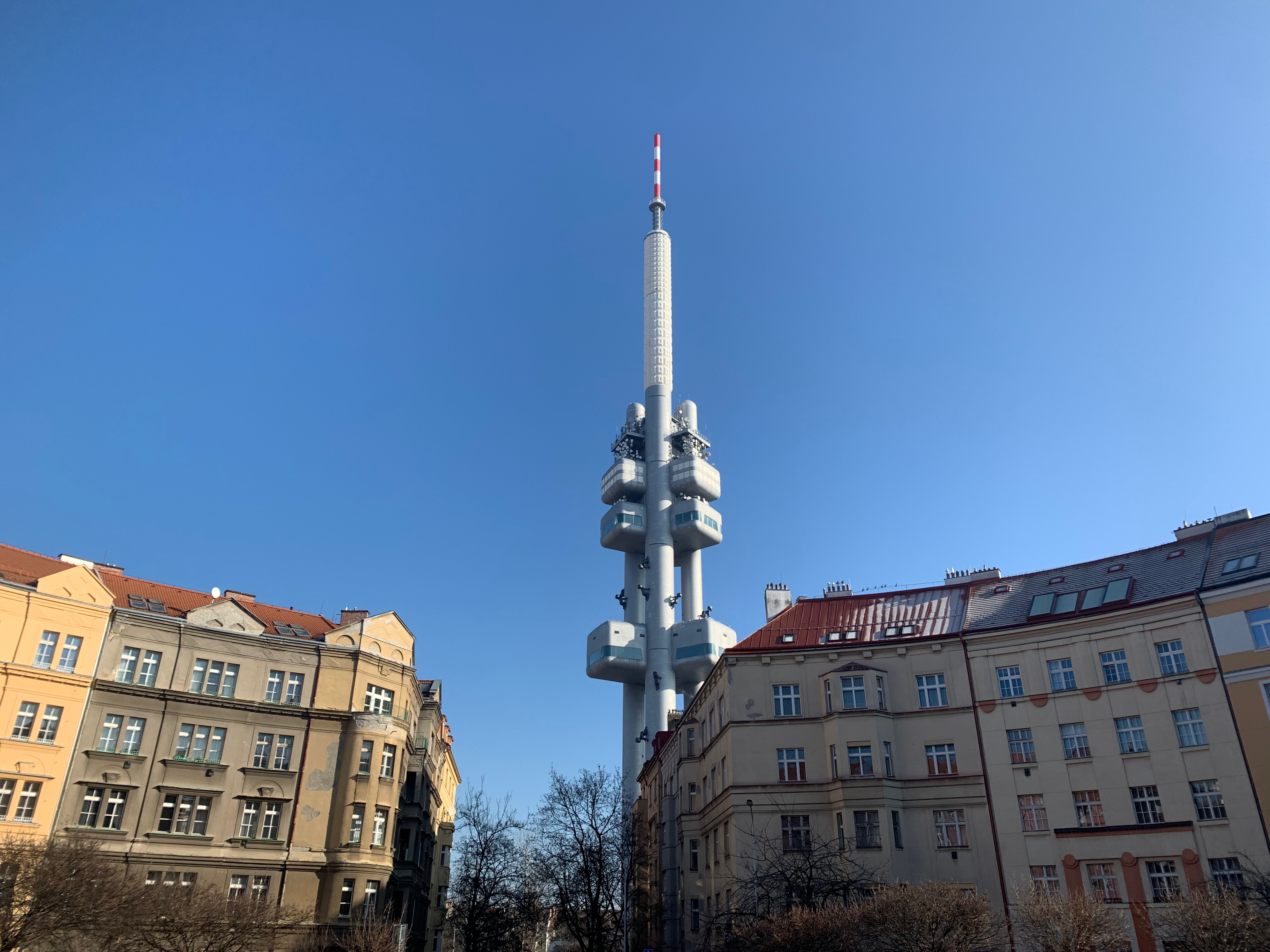
Like Berlin, Prague also has a very distinctive TV tower. The weirdest thing about it? There are babies climbing up the side. Statues, of course. You may have guessed that these were, once again, designed by artist David Černý. The Zizkov Television Tower is the tallest building in the city at 216m and was designed to look a bit like a rocket. We opted to walk over to the tower and pay to visit the viewing gallery. On this occasion, the tickets were cash only and there was an ATM right outside. Cheekily, this did charge for cash withdrawal which was slightly annoying. Entry costs 300cz which is around £10. You get fabulous panoramic views of the city and there is a short film about how the television tower was built. Across one area there was also a comparison between the TV tower and other tall buildings across the world. This one is significantly smaller than many but, it was interesting to see the comparisons.
It was a hazy day when we went up the tower so, the view was hindered by that. However, it is also worth taking the walk across the city as you pass through Riegrovy Sady park which also has great views from its slightly elevated position.
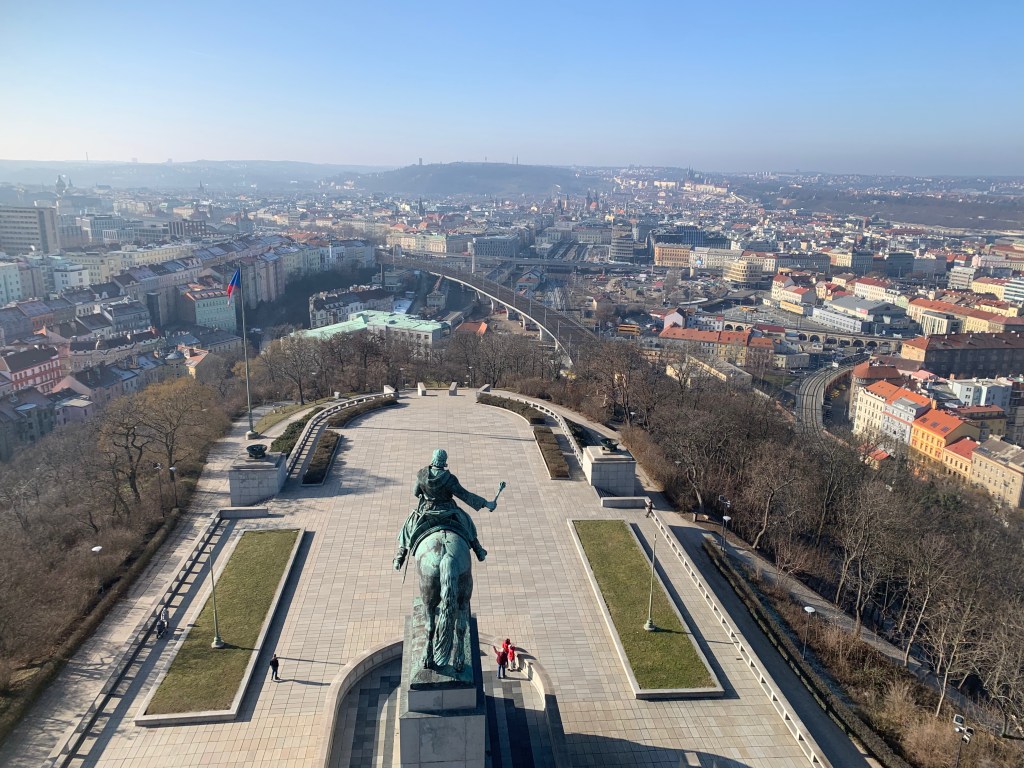
Vitkov Park
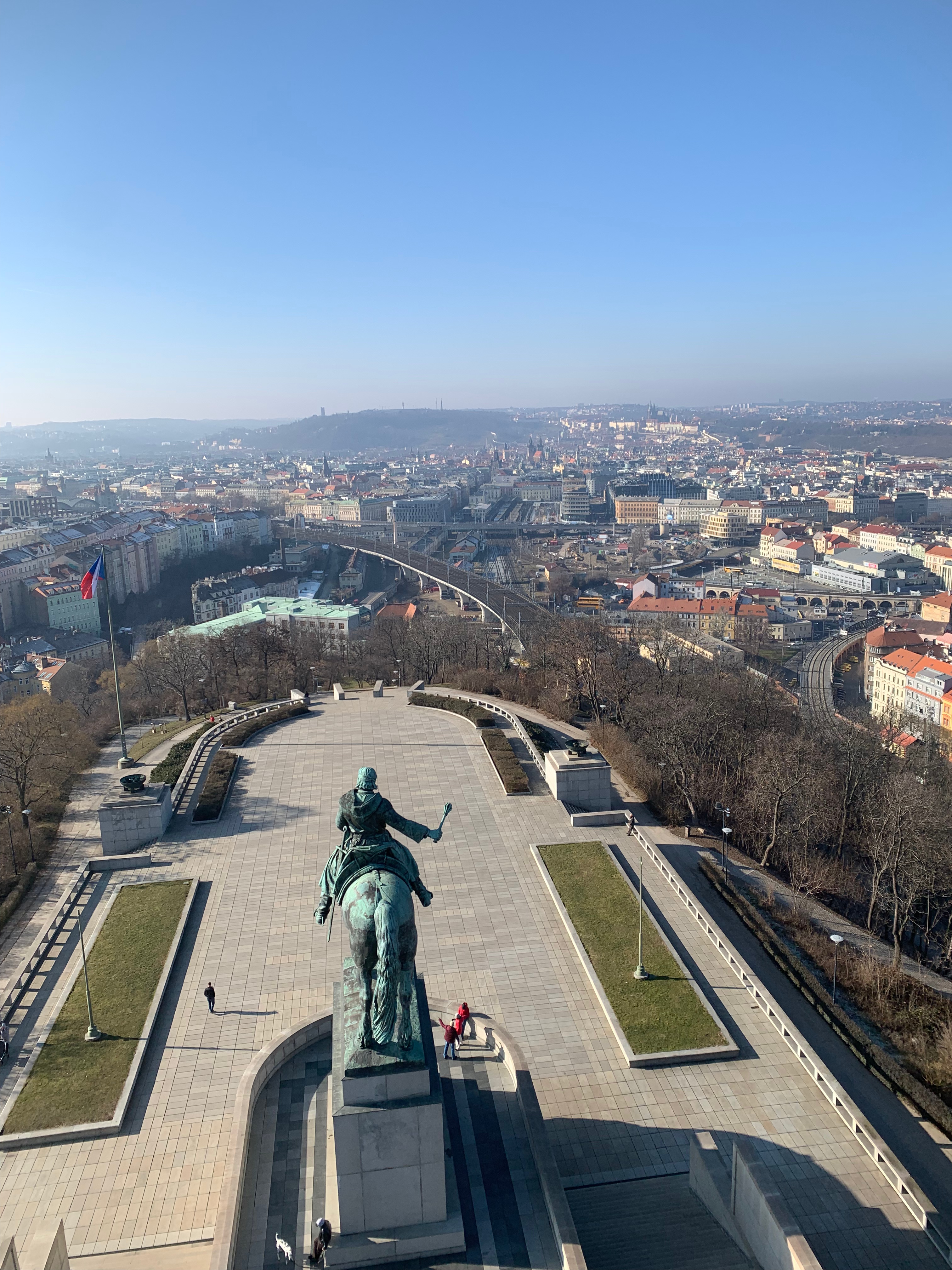
We had some time before getting the bus to the airport after visiting the TV tower on the final day of our trip so, on our walk to the station, opted to visit Vitkov which is home to the National Monument at Vitkov and a museum containing the Tomb of the Unknown Solider. The monument is free to enter and the highlight for me was heading up to the roof which arguably has slightly better views than the TV tower. It was well worth making the detour and heading here even though we were slightly rushed for time. It is a great spot and I highly recommend this if you’re going to pick one of these viewing points.
Vyhlidka na Letne
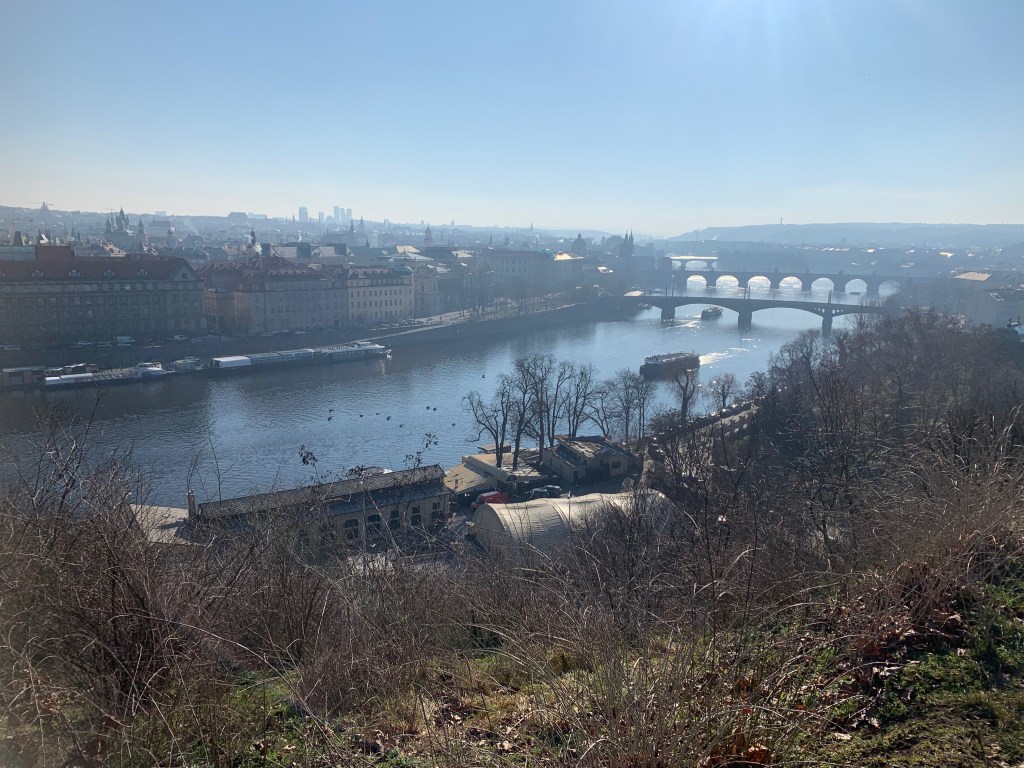
The final of the three viewing points is another park called Vyhlidka na Letne. This was a popular spot, but much less so than the Castle viewpoint! The park is situated on a hill and so you get panoramic views across the city, the river and its bridges. I have heard that the views are phenomenal at sunset.
As well as the viewpoint, the park is also home to the Prague Metronome which used to hold a huge statue of Josef Stalin. The statue took five and a half years to build and was the largest memorialisation of Stalin in the world. It was designed to represent Stalinist ideology and was commissioned after the communist party took over Czechoslovakia in 1948, backed by the Soviets. In 1962, the statue was demolished under orders from the Soviet Union as part of a process of “de-Stalinisation”. The remains of the statue are stored in a chamber beneath the Metronome and aren’t visible now.
That wraps up everything we did, saw and ate during our 48 hour trip to Prague. I think this is the perfect amount of time to see the city and really immerse yourself in the atmosphere and the history. The best way to see Prague is to walk the streets, taking in the buildings and the feel of the place. It was a fabulous couple of days, at the right time of year.
Have you visited Prague?
Amie x


 Explore with Amie
Leave a reply to tofuvtravels.com Cancel reply