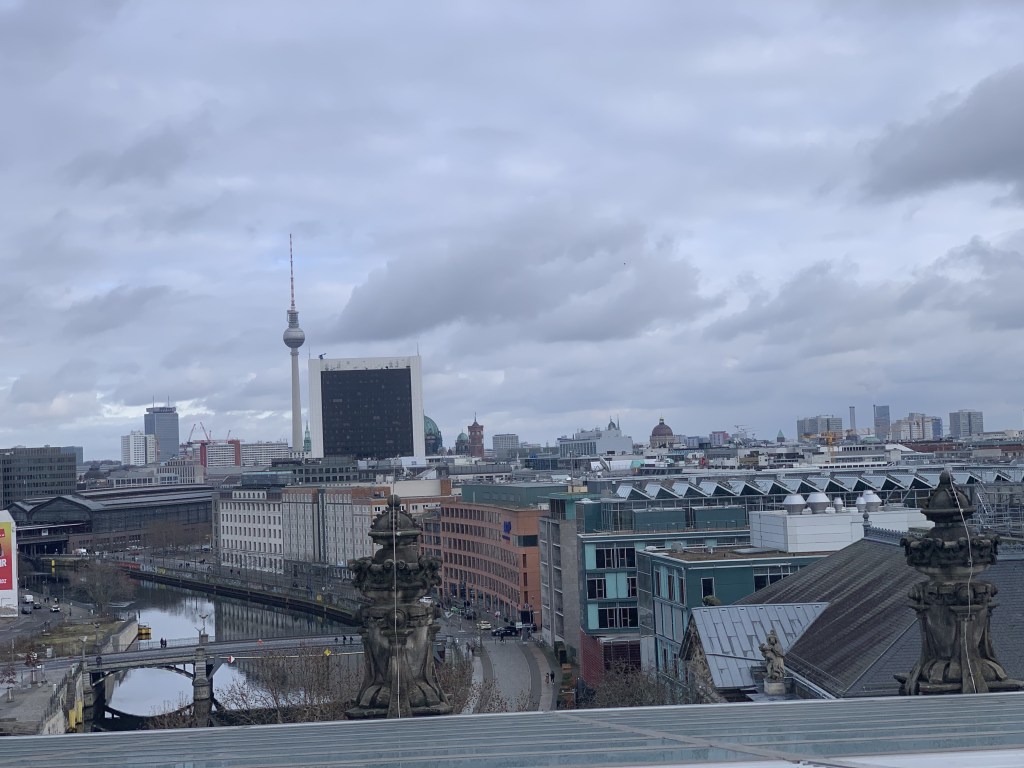
For two years running we have done a trip abroad for a several of days at the beginning of the year and I think it is the perfect time to go away. It sets us up for a great year ahead. Today, I’m sharing the first of our 2025 destinations: Berlin, Germany. If you are planning a trip to Berlin, here is everything you need to know:
Getting there
Berlin has one main airport, Berlin Brandenburg, which was supposed to open in 2011 as construction began all the way back in 2005. However, after years of delays, it finally opened in 2020. The second terminal was then opened in 2022, with planned expansions for 2035. This airport replaced Tegel. You can get flights to Berlin from destinations across the world. If you are travelling from the UK, RyanAir offer budget flights to Berlin from Manchester, Birmingham, London Stansted, East Midlands and Edinburgh.
We opted to travel from Edinburgh to Berlin as, despite being a few of hours from our home, the price of parking here is much cheaper than in airports such as Manchester. Edinburgh is a nice and easy airport with a Wetherspoons for breakfast. An easy choice.
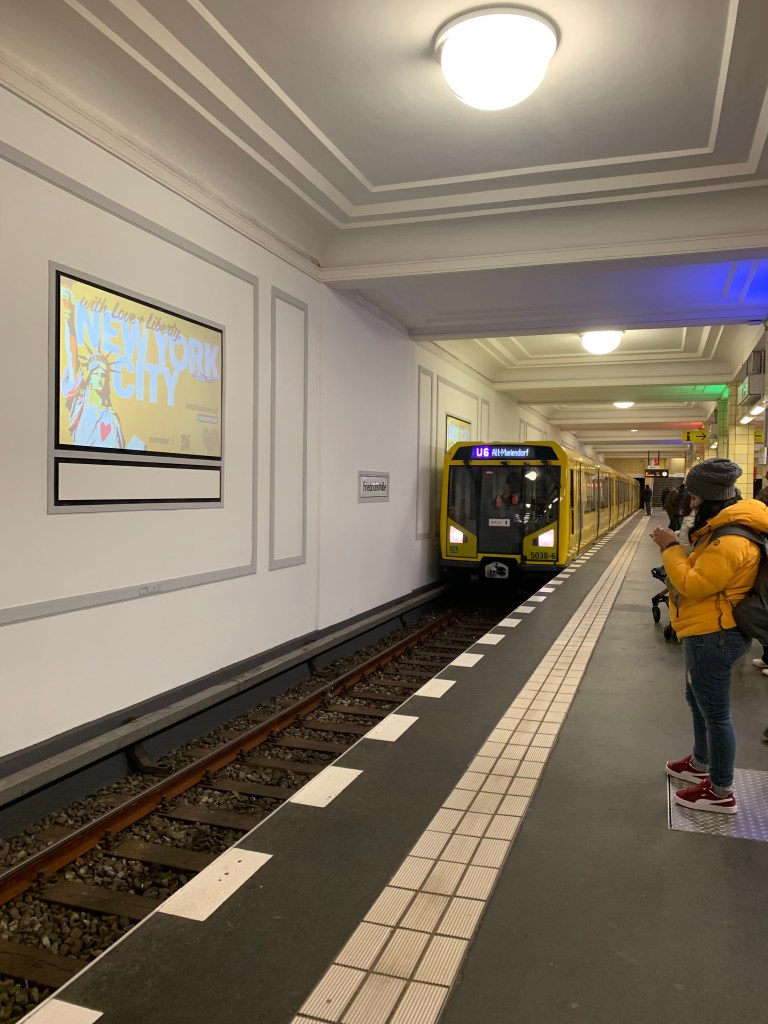
Getting around Berlin
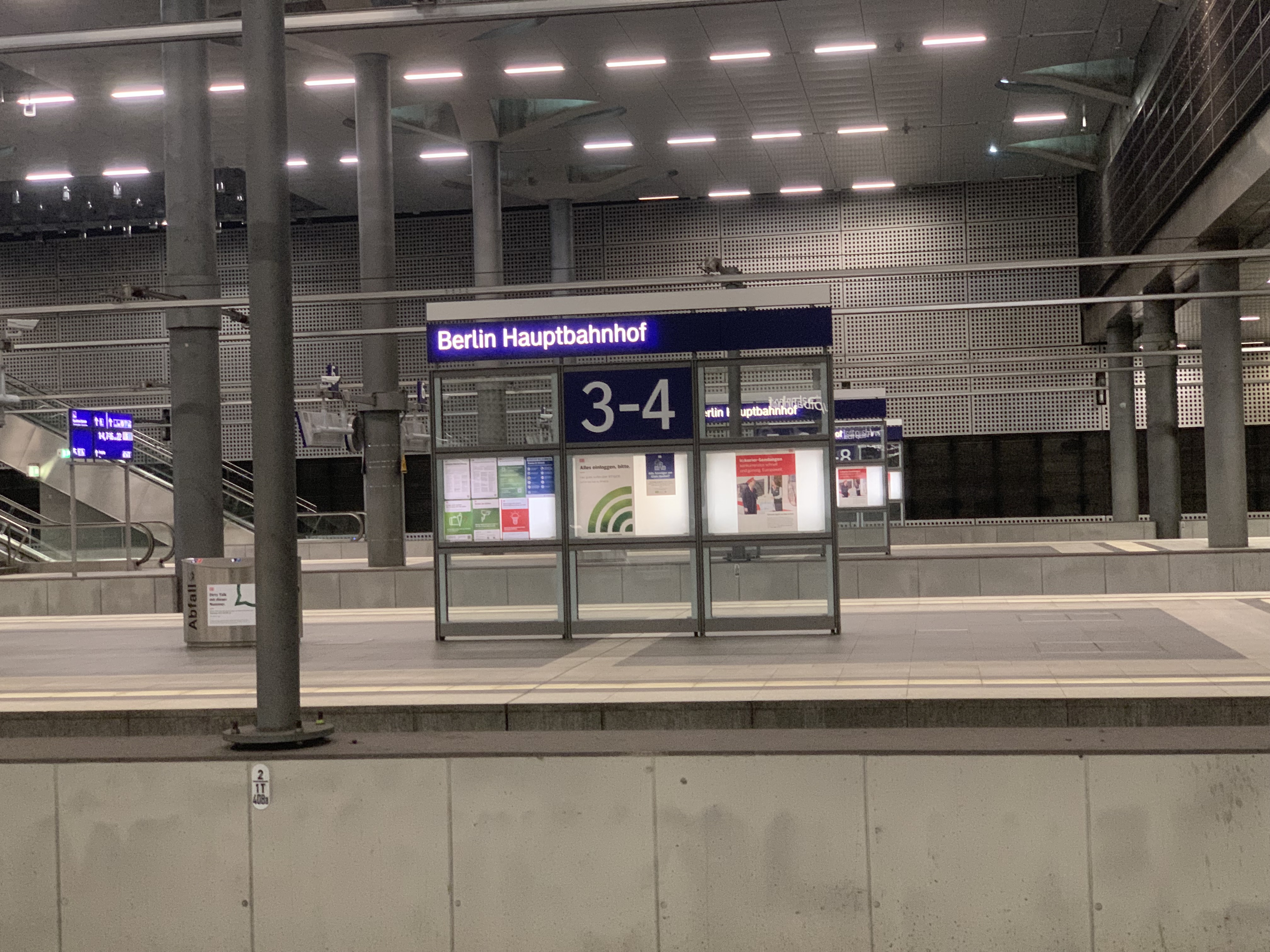
From the airport, there is a train that takes you straight into the city centre. The S9, which is clearly signposted from the terminal, runs every 20 minutes into the city centre. Key stops include the Alexanderplatz, Friedrichstraße and Berlin Main Station.
The metro system is also fairly easy to use – there is the S-Bahn which is overground and U-Bahn which is underground.
We used the U-Bahn to get from one end of the city to the other and visit destinations a little further afield. It would be great to utilise for those who aren’t able to walk too far each day. Ticket machines offer English translations and are linked to specific zones, similar to how the tube works in London. Individual journey tickets by zone are available or, you can buy a 24-hour ticket which allows unlimited travel within that zone for the whole day which makes it quite good value. However, like in a lot of European cities, you must remember to validate your ticket. These machines are located next to the ticket machines and basically, time stamp the ticket.
Accommodation
Leonardo Hotel
This trip was a Christmas present and our accommodation was part of the surprise however, I can say that Alex chose very well. We stayed at the Leonardo Hotel which is a chain that covers quite a few destinations across Europe, including 7 in Berlin which is pretty astonishing. We stayed in the Berlin Mitte hotel which was in the perfect location in my opinion. It was close to food options and not too far to walk to some of the main sights in the city. Breakfast is available and there are other amenities such as a spa and swimming pool. There may be cheaper options available in hostels but, for this location and the level of luxury, this was a great price. The rooms were clean; the shower was great and there was a fridge in the room, perfect for storing our lunch.
Places to Eat
Kamps Bäckerei mit Backstube
There are many bakery options in Berlin however, we opted for one of many Kamps bakeries located throughout the city. This offered a wide range of baked goods and fresh bread. We popped in for breakfast one morning. It was cash-only but, I believe this may have been because of a technical issue on this day rather than it being a regular occurrence. For those with allergies, it is worth noting that in this particular branch, the staff didn’t speak English but, it may differ elsewhere.
Hans Im Gluck
For dinner on the first evening, we decided to go out for burgers. We do like a burger restaurant and this one certainly didn’t disappoint. The food was great! We ordered two burgers and a large portion of chips to share and the portion size was more than enough. This, plus two drinks, came to just under £40 which I think is pretty good value for money too. It was very busy but, we managed to get a table. The staff were lovely and the service was great. I felt very comfortable eating here with my allergy too.
Schnitzelei
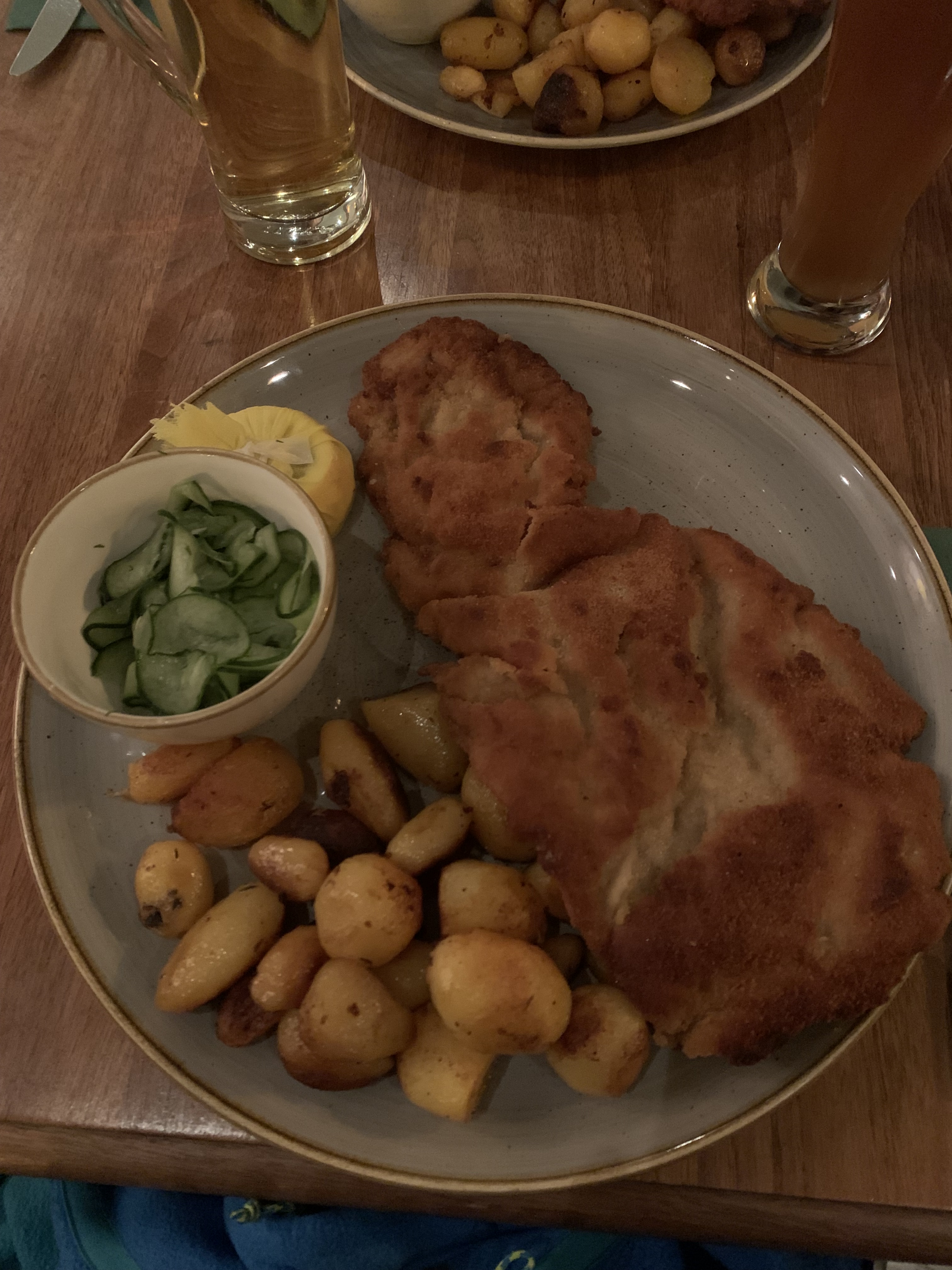
After struggling to find a restaurant that had space for a booking on day one, we opted to book for the next night at Schnitzelei which was listed as one of the best places to eat in Berlin. We wanted to try some more German food whilst we were there. Schnitzelei was great too and I would highly recommend it. It is in a bit of an unusual location and is very much hidden away. Once you’re inside though, the food more than makes up for it. We were also offered a free small drink on arrival which is a nice touch. The prices are between €20-30 and it is well worth the money.
We used supermarkets and bought lunch which consisted of fresh bread and ham, cheese and some fruit and yoghurt. This was a cheap and cheerful way of eating lunch. One food item that we didn’t try was Currywurst which would have been nice, I think. It is a curried sausage which is usually served with chips. If I was to go back to Germany, I would make an effort to try it.
Things to see/do:
Monuments
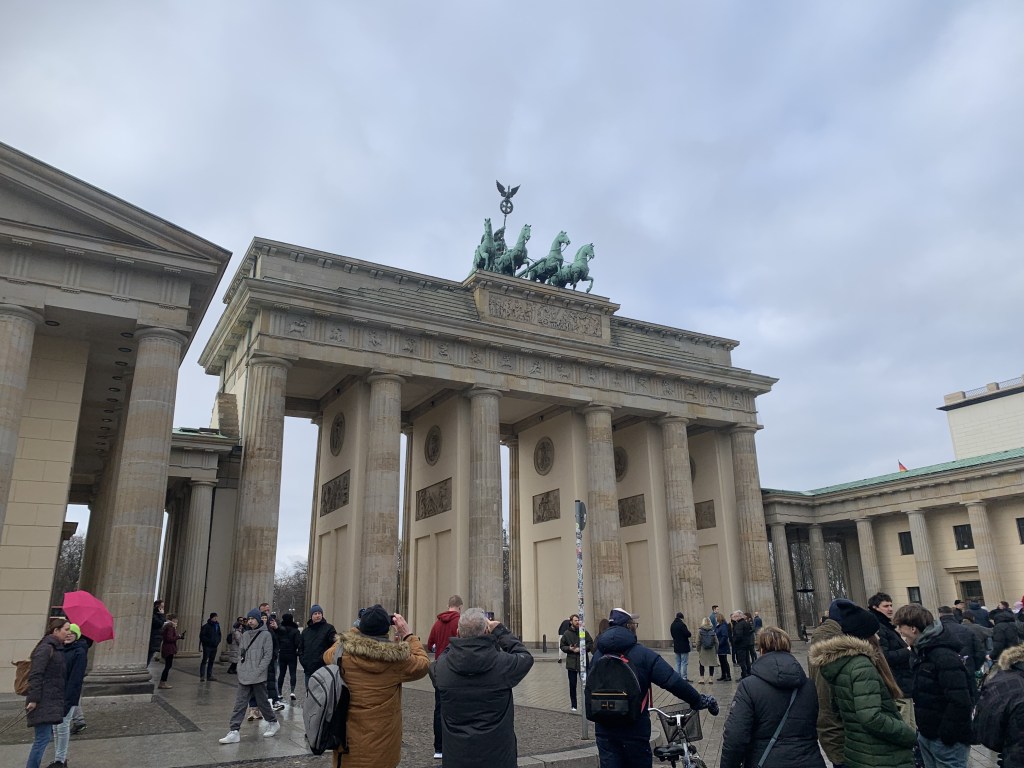
Brandenburg Gate
Arguably one of most famous sights in all of Berlin is the Brandenburg Gate. The current gate was built in 1779 and it has since become a significant part of Berlin’s history. In Nazi Germany, the gate was a symbol of the party and later, when Berlin was divided, the gate marked the border between the Soviet and the British portions of the city. Surprisingly, the gate survived WW2 although, it was damaged with bullet holes and from nearby explosions. It then became part of the division between West and East Berlin with the Berlin Wall being built not too far away. After the reunification, the gate became a symbol of peace and unity.
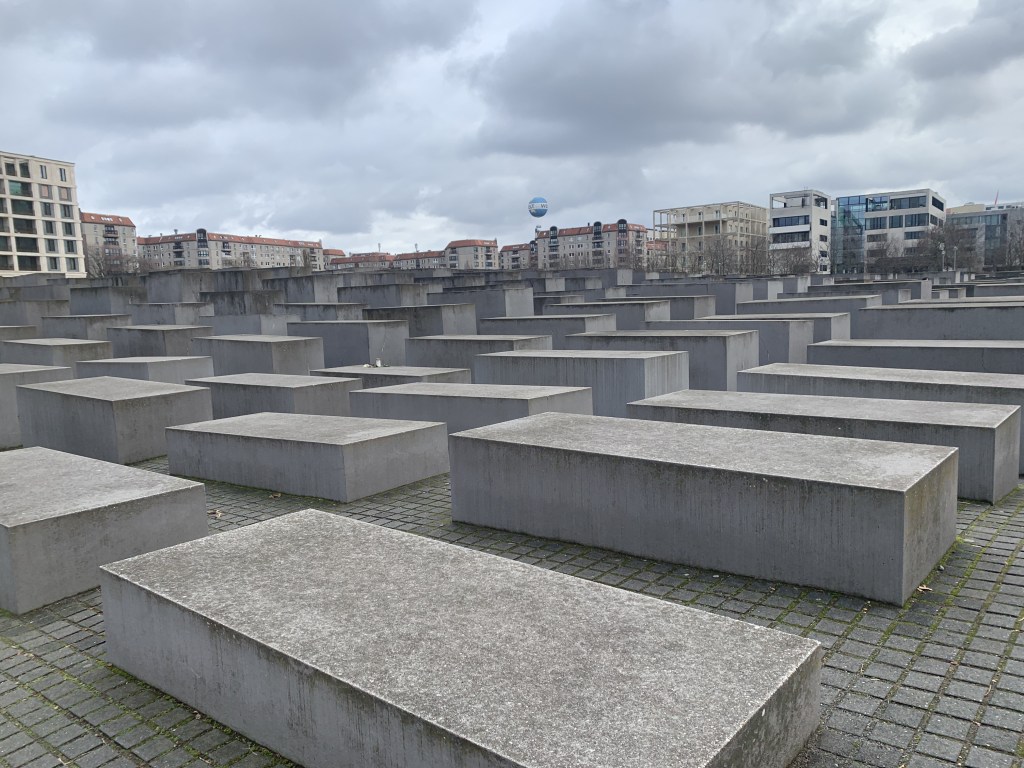
Memorial of the Murdered Jews of Europe
This is a very unique memorial. It consists of over 2,000 concrete slabs built at various heights across a space of 1.9 hectares or 4 acres in remembrance of the Jewish people that lost their lives in WW2. Construction of the memorial began in 2003 and it was officially unveiled in 2005, sixty years after the end of the Second World War. You can find the memorial at Cora-Berliner-Straße 1, 10117 in Berlin which was chosen as this street had the highest population of Jewish people living there before WW2.
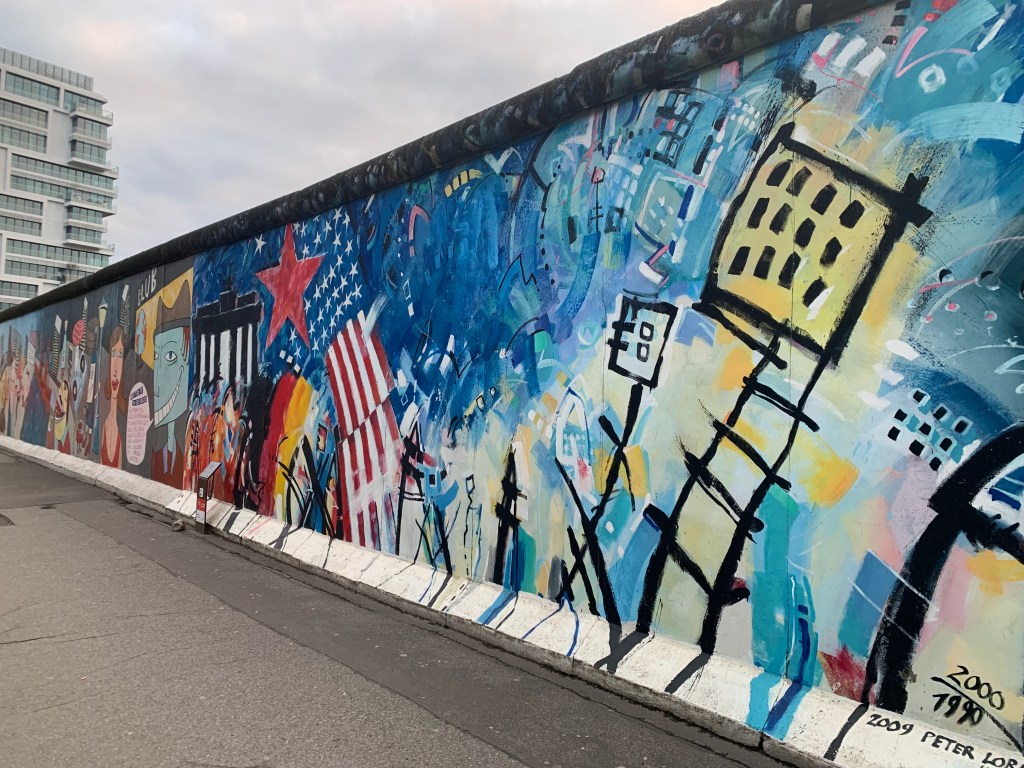
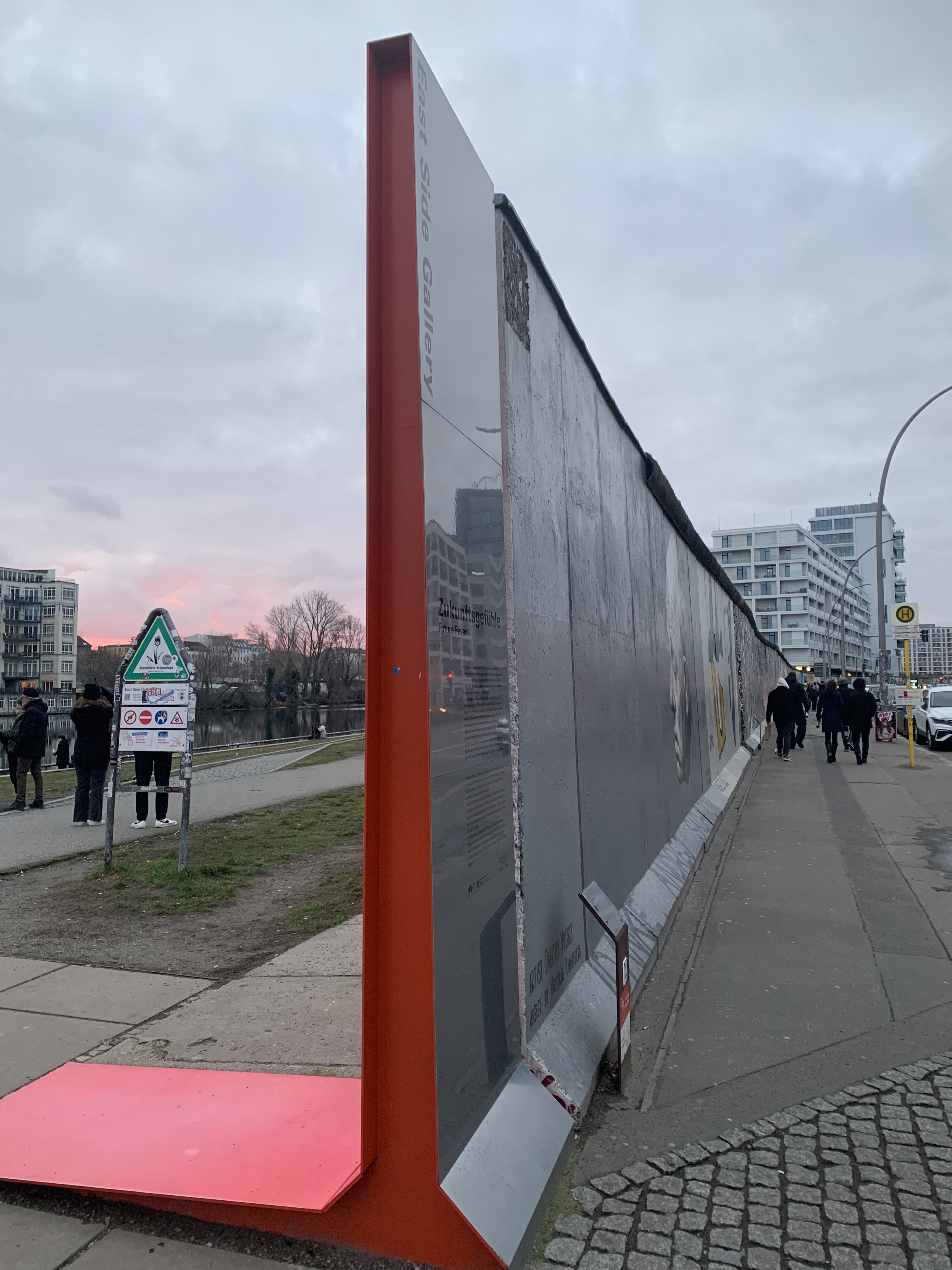
Berlin Wall: East Side Gallery
The Soviet Union and the Allies had portions of the capital city, creating West Berlin and East Berlin, despite the city’s location within East Germany (Soviet territory). The wall was built by the GDR, the German Democratic Republic or East Germany, in 1961 to prevent people from fleeing across the border to West Germany. The GDR had taken on a Soviet-style regime and many were defecting across the border in Berlin in order to be able to cross to other parts of West Germany and beyond. The fall of the Berlin Wall took place on the 9th November 1989 when, five days after a mass protest, an East German spokesperson announced that people in East Berlin could freely travel into West Berlin. This was in fact a miscommunication as Günter Schabowski was supposed to announce a relaxation to the rules allowing people to cross the border however, instead, announced that anyone could cross, effective immediately.
The East Side Galley is the longest stretch of the Berlin Wall that still remains. In the summer of 1990, this section of the wall was painted by artists from all across the world and in 2009, the original artists were asked to replicate their designs for this gallery. Where the artists didn’t take part in the replication, the places on the wall were left blank. We travelled on the S-Bahn to Ostbahnhof which is the closest station to the gallery as it is located on the opposite side of the city to where we were staying. However, there are quite a few hostels in this area so you may find yourself staying close-by.
Hitler’s Bunker
On a seemingly random street, next to an average car park, is a sign telling you all about Hitler’s Bunker. On Gertrud-Kolmar-Straße 14, 10117 Berlin, you will find the site of Hitler’s Bunker which was discovered by the Soviets. In the final days of WW2, Hitler married Eva Braun in the Führerbunker and dictated his final will and testament. The next afternoon, 30th April, Hitler killed himself in the bunker along with his new wife. It is said that the size of the bunker has been overestimated as the bunker was destroyed by the Soviets in the late 1940s in an attempt to rid Berlin of Nazi landmarks. In 2006, in the lead up to the FIFA World Cup which was being hosted by Germany, an information board was put up at the site.
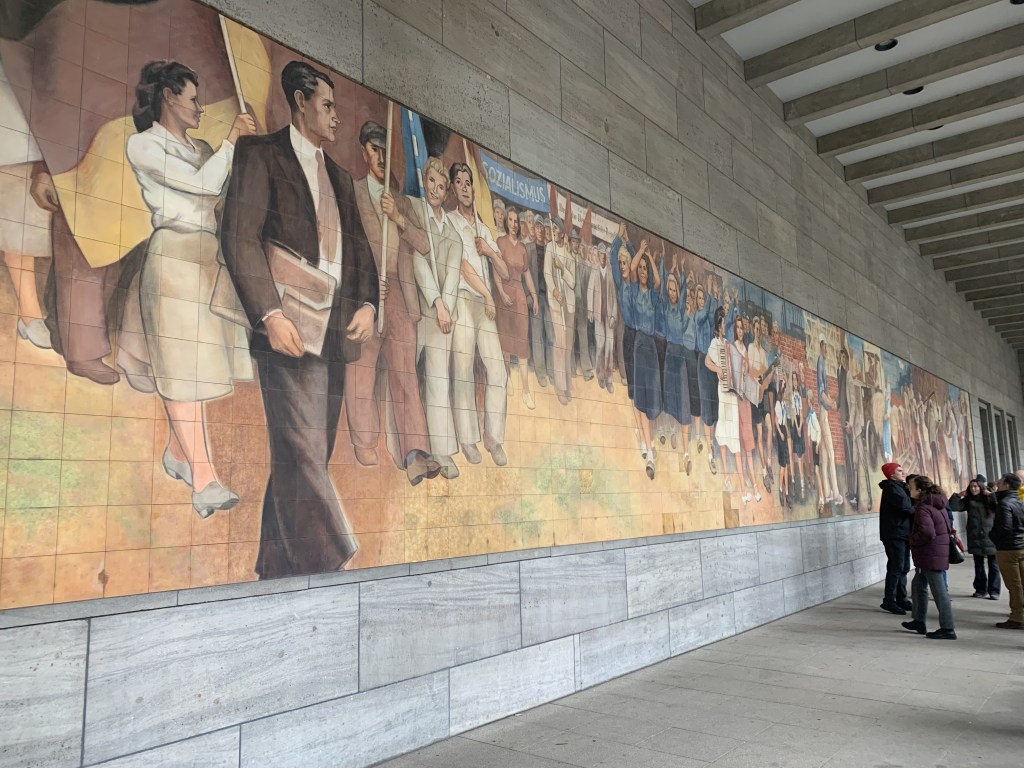
Aviation Ministry of Berlin
The Ministry of Aviation was a government building during Nazi Germany. They were in charge of the development of all aircraft from 1933 to the end of the war headed by Hermann Göring. The building was built by Ernst Sagebiel, who also built Tempelhof Airport which I’ll get to later. The old Ministry building is home to a mural which is made of Meissen porcelain tiles and was constructed in the early 1950s. The mural depicts the Socialist ideals of a happy and content East German society.

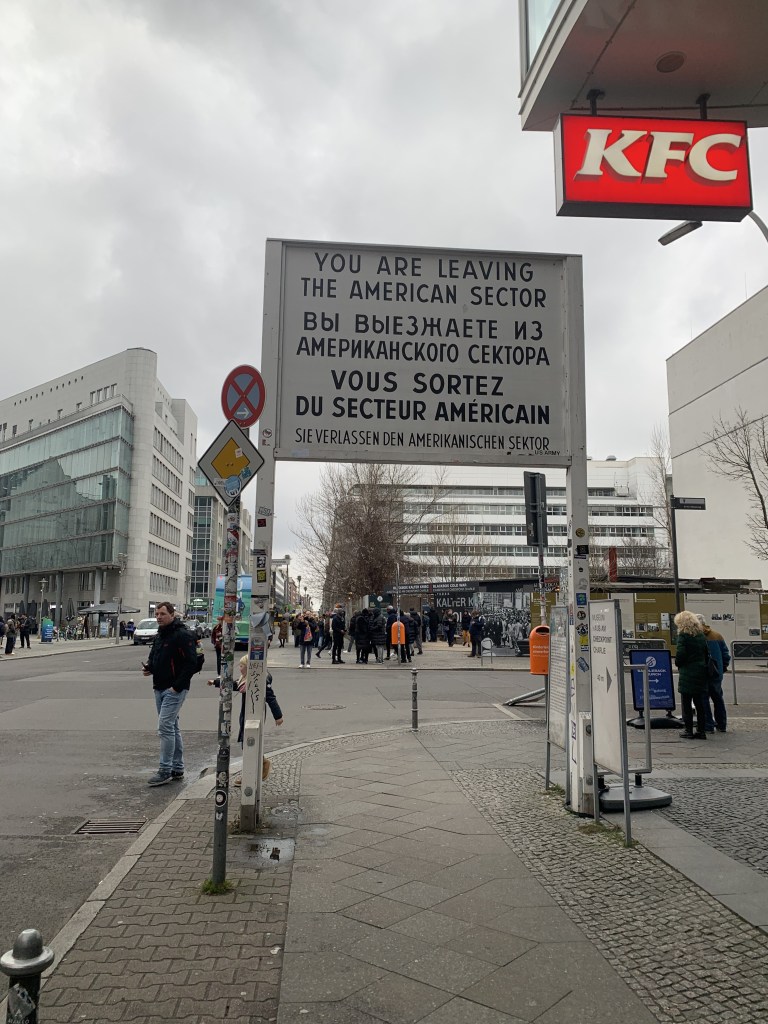
Checkpoint Charlie
Another of Berlin’s most famous tourist spots is Checkpoint Charlie which was a crossing point from East Berlin to West before the Wall was built. Original remnants of the border have been put together with recreated elements. There is also a small museum alongside the Checkpoint so you can learn about the history of the crossing. Checkpoint Charlie is most renowned for the tense exchanges of prisoners between the Soviets and Americans which is depicted in the Tom Hanks film, Bridge of Spies.
Museums
Tranenpalast
Tranenpalast was another crossing point from East to West Germany but, in this case it was specifically for people travelling via the train services – U-Bahn and S-Bahn. After the fall of the Berlin Wall, the building became a nightclub until 2006. Then in 2008, it became a museum as it is still today. Located just across from the hotel, you can learn more about the role of the crossing point and view original artefacts and documents from Berlin at the time of the Cold War. The museum is free to enter, too.
Topography of Terror
Topography of Terror is another museum which has both indoor and outdoor exhibitions. The outside runs alongside another fragment of the Berlin Wall. The museum itself details more about the war and the Nazi’s behaviour and propaganda. Interestingly, the building is on the site of the former SS Reich Security Main Office and the headquarters of the Gestapo from 1933 and 1945. The building was destroyed by allied bombing and, the museum is now in its place. Like with Tranenpalast, entrance is free.
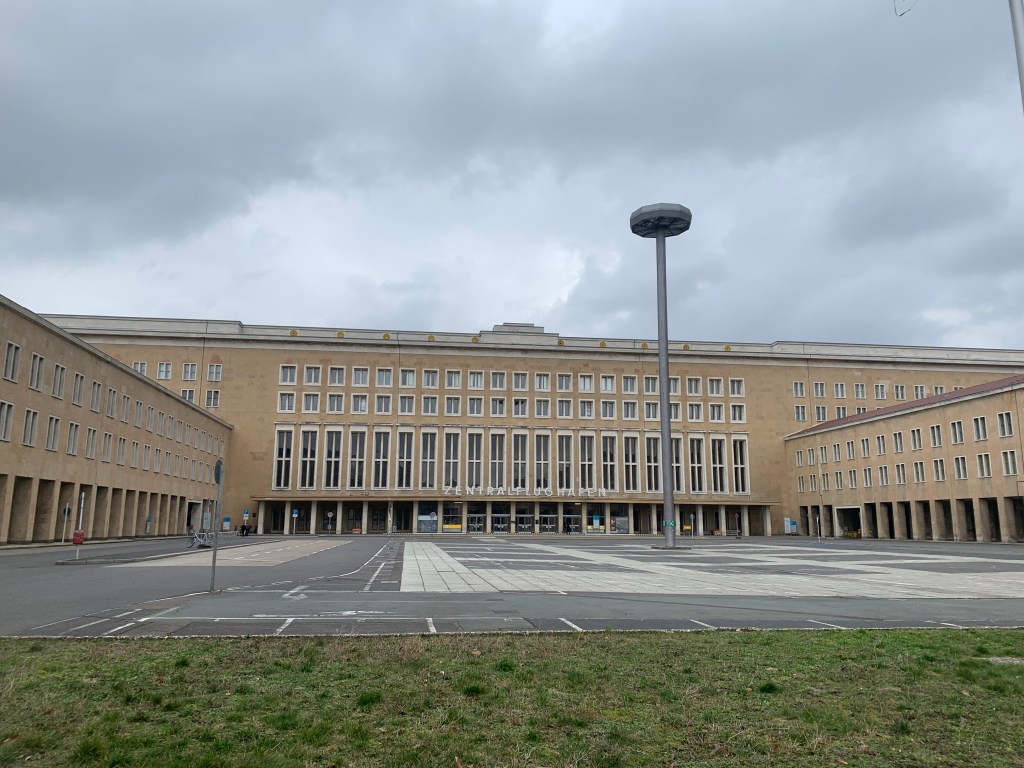
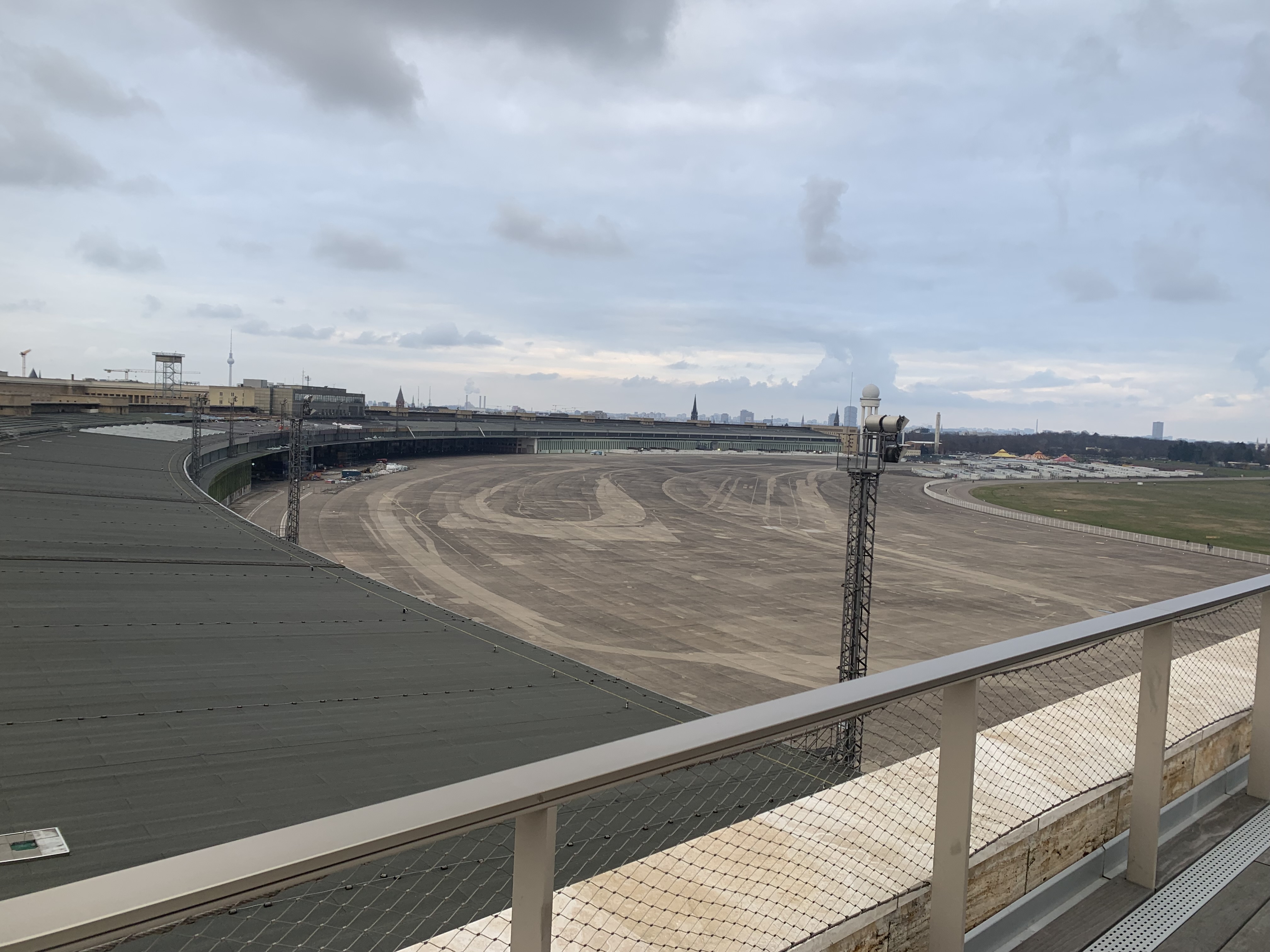
Tempelhof Airport
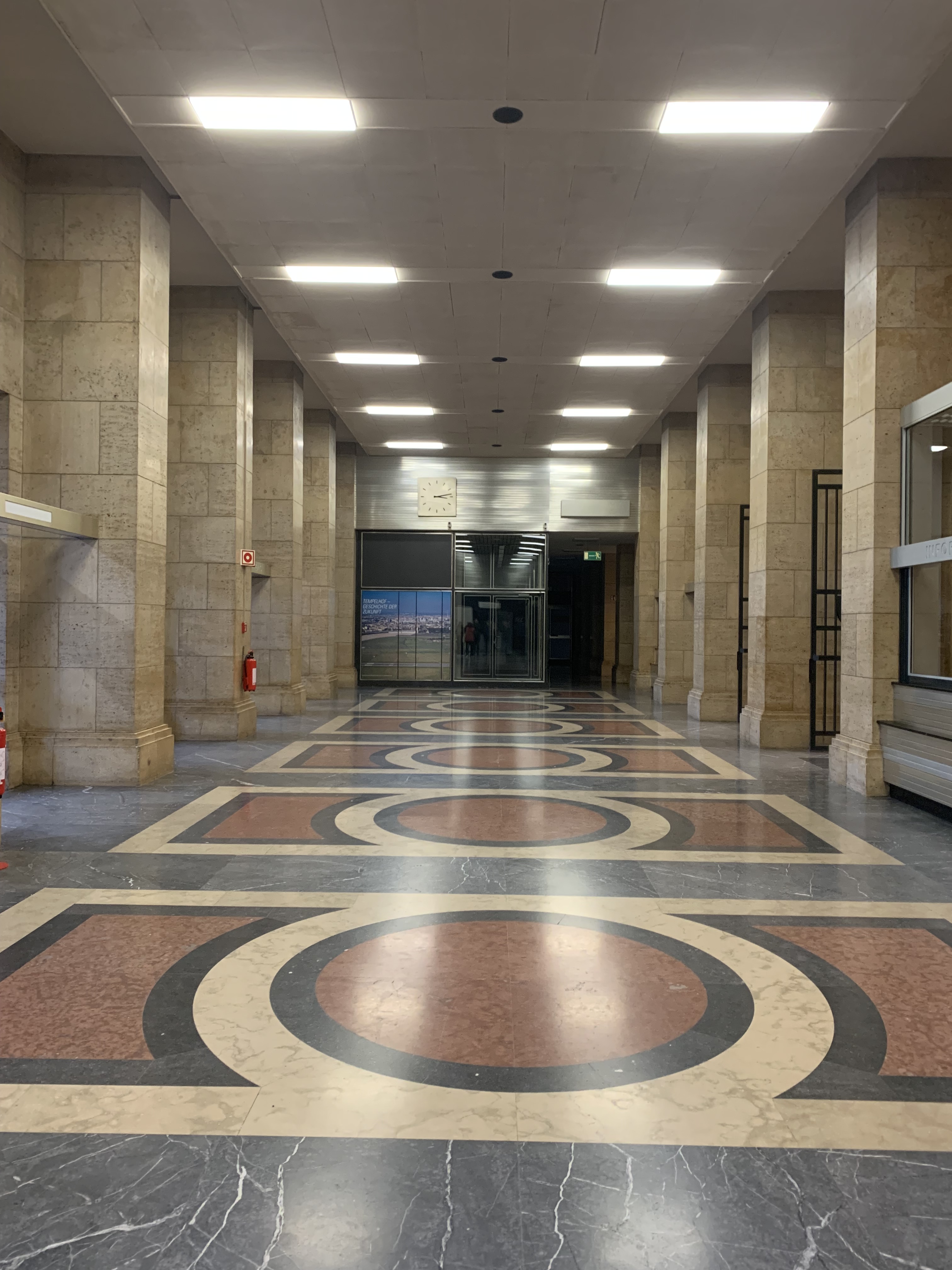
Alex’s favourite part of out trip to Berlin was the afternoon that we spent at Tempelhof Airport. This airport was one of the first in Berlin and was created by the Reich Ministry of Transport in 1923. It underwent a massive redevelopment and redesign by Ernst Sagebiel including a distinctive C shape and over arching roof which was going to be used for Nazi rallies and performances. After the war, Tempelhof Airport was the location of the Berlin Airlift. When the Soviets blocked the Western allies from sending supplies into West Berlin by rail or road, they needed to get resources such as food and coal to the people. The innovative solution was the Berlin Airlift which involved the British and US airforce flying from their West German sectors to W.Berlin over 250,000 times from June 1948 to May 1949. In the fifteen months of the blockade, it is thought that 2,334,374 tons of supplies were flown in. The airport was used as both a passenger airport and a US air base during the Cold War.
After reunification, the airport continued operating until 2008 when it was finally closed. It was supposed to be replaced by Berlin Brandenburg only a few years later but, delays meant that Tegel would be the main Berlin airport for another decade. Tempelhof is now used as an airport in films such as Indiana Jones as well as for tours. There are two options: an hour long shorter tour and a two hour version. The main difference between the two is that the longer tour goes into one of the hangers and you can see a Stuka and other historic aircraft. For us, the one hour was perfect. The security desk and luggage conveyer-belts are much smaller than anything you would get nowadays. The two hour tour costs €17.50 whilst the one hour is €12 and they are offered in both German and English. Note: entry to the museum is not permitted without a tour guide.
Separate to the tour, you can also go up to the top of the control tower to look across the airfield (now an urban park) and airport. Tickets cost €4 per person but, entry is free on the first Sunday of the month. For the ticket price, you get access to a museum area to learn more about the airport and the roof. If you have taken the airport tour, the museum area won’t tell you anything you haven’t already heard. If you’re only going to do one, I would recommend heading into the airport for a tour.
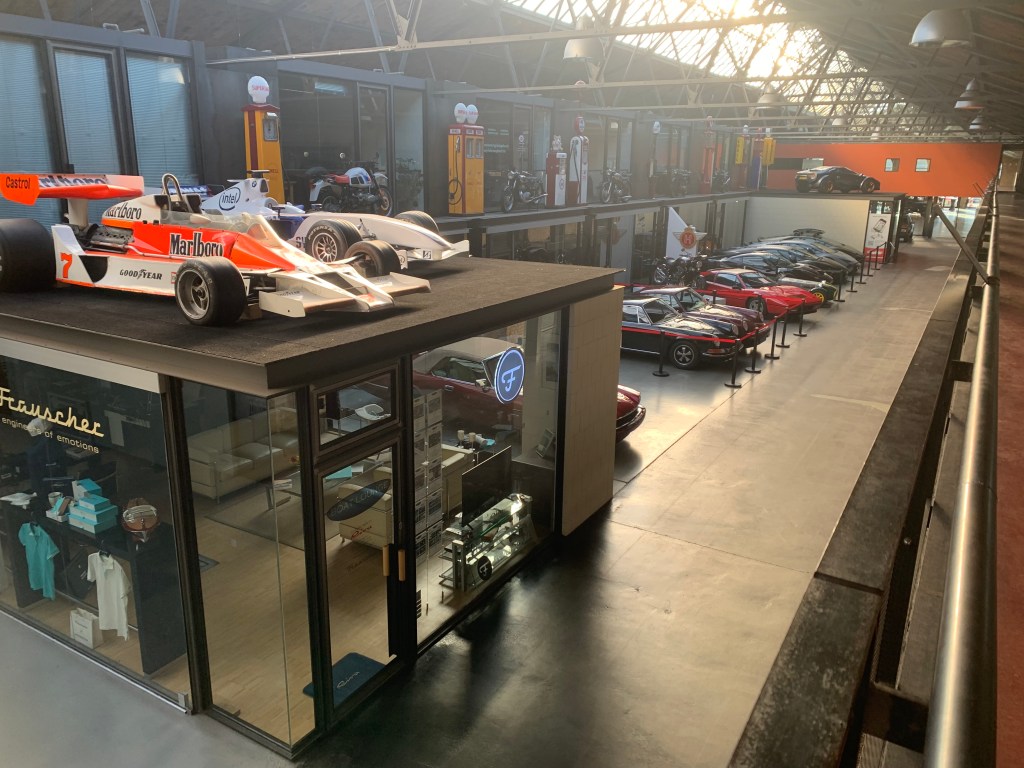

Classic-Remise Berlin
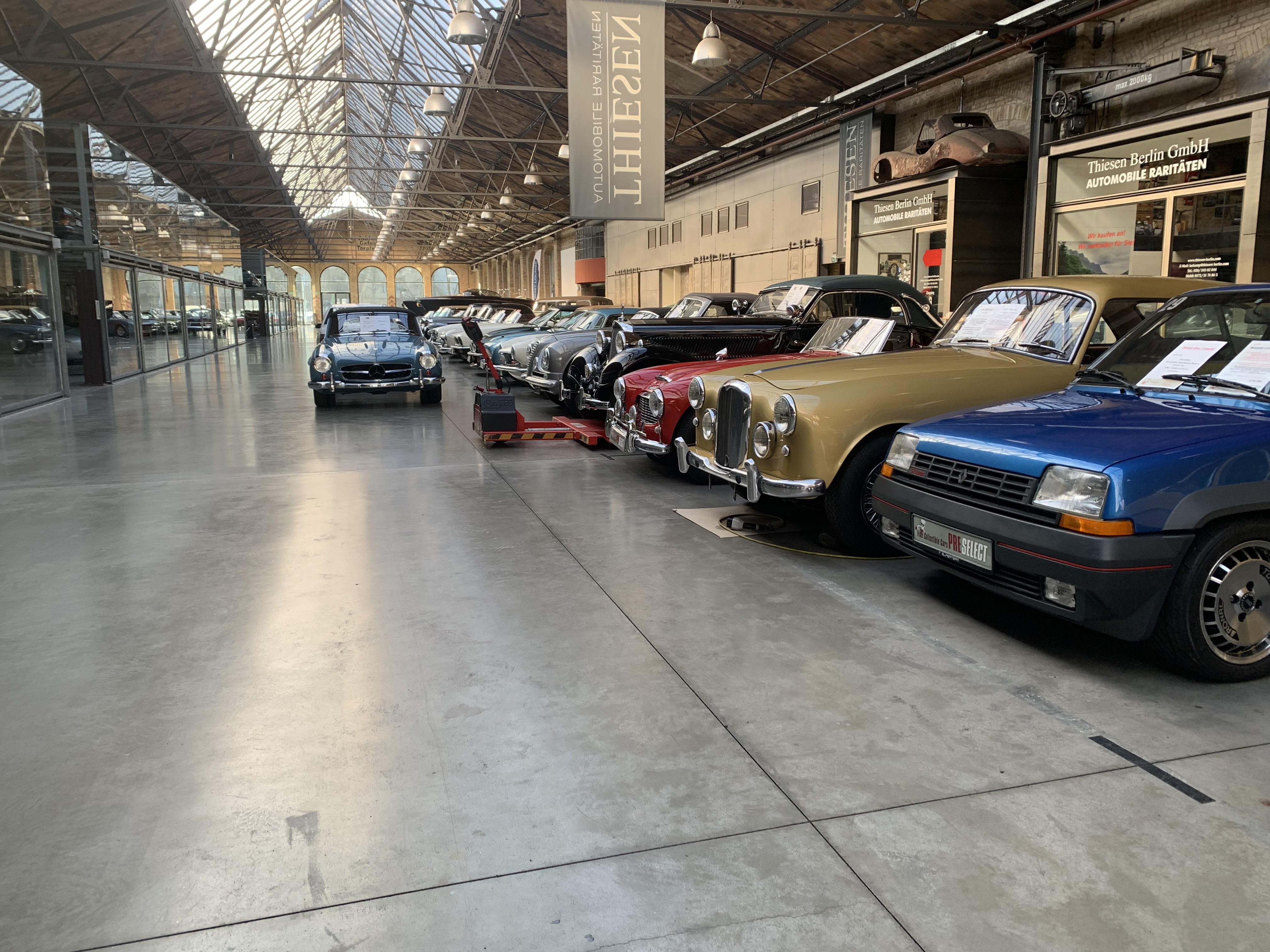
Something a little bit different… Our final morning in Berlin was spent in the Classic-Remise Berlin which is a car garage and a museum all in one. We travelled on the train to Beusselstraße and, a short walk later arrived at the museum. If you’re a car fan this is a must-do. We saw so many greats including a Bugatti Veyron which was the fastest street-legal production car in the world for a while, and a Ferrari La Ferrari, Lancia Stratos and a Porsche 918. Supercars, rally cars, Formula 1 cars…a petrol heads heaven. Entry was also free.
VW Exhibition: Iconic
Sadly, it looks like this may be a temporary exhibition but, if it is still running, I highly recommend taking a look at the VW iconic exhibition. This showcases old VW cars as well as brands now under the VW group, such as the Audi TT. There are Golfs through the ages, two VW campervans, a Lamborghini Countach and so much more. Entrance is once again free making this the perfect way to hide from the rain (as we did!) or spend an hour.
Notable Buildings
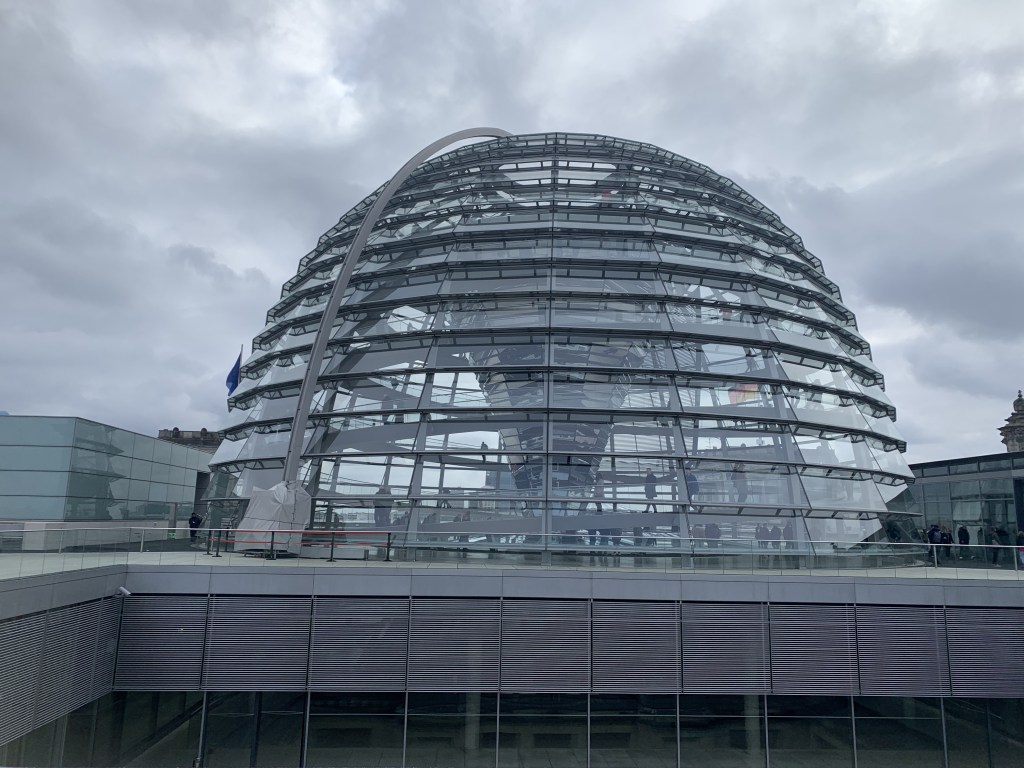
Reichstag Building
The Reichstag is the home of the Bundestag, Germany’s parliament. The building was constructed in the 1880s – 1890s, housing the German Empire and the Weimer Republic. The Nazi government also used the building until it was damaged by a fire in 1933 and they were “forced” to move. Because of the buildings governmental importance, it was a big target for the Red Army during the Battle of Berlin which resulted in more damage. From 1995 to 1999, the building underwent a huge redevelopment and redesign so that it could once again become the parliament building of Germany. This included a glass dome on the top of the building, over the plenary chamber. Perhaps as a symbol of the now transparent and honest government, the glass dome is open to visitors.
Booking to enter the building is done via online registration although entrance is free. Admission is every 15 minutes and you can head up to the dome and onto the rooftop which has fabulous views across the city.
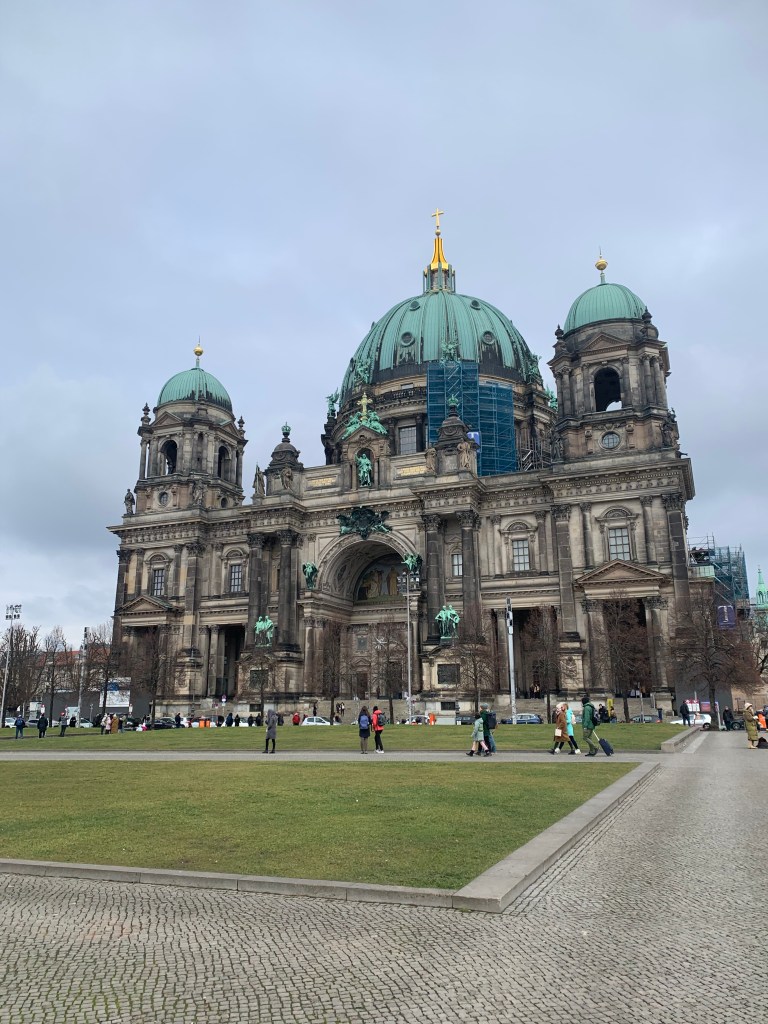
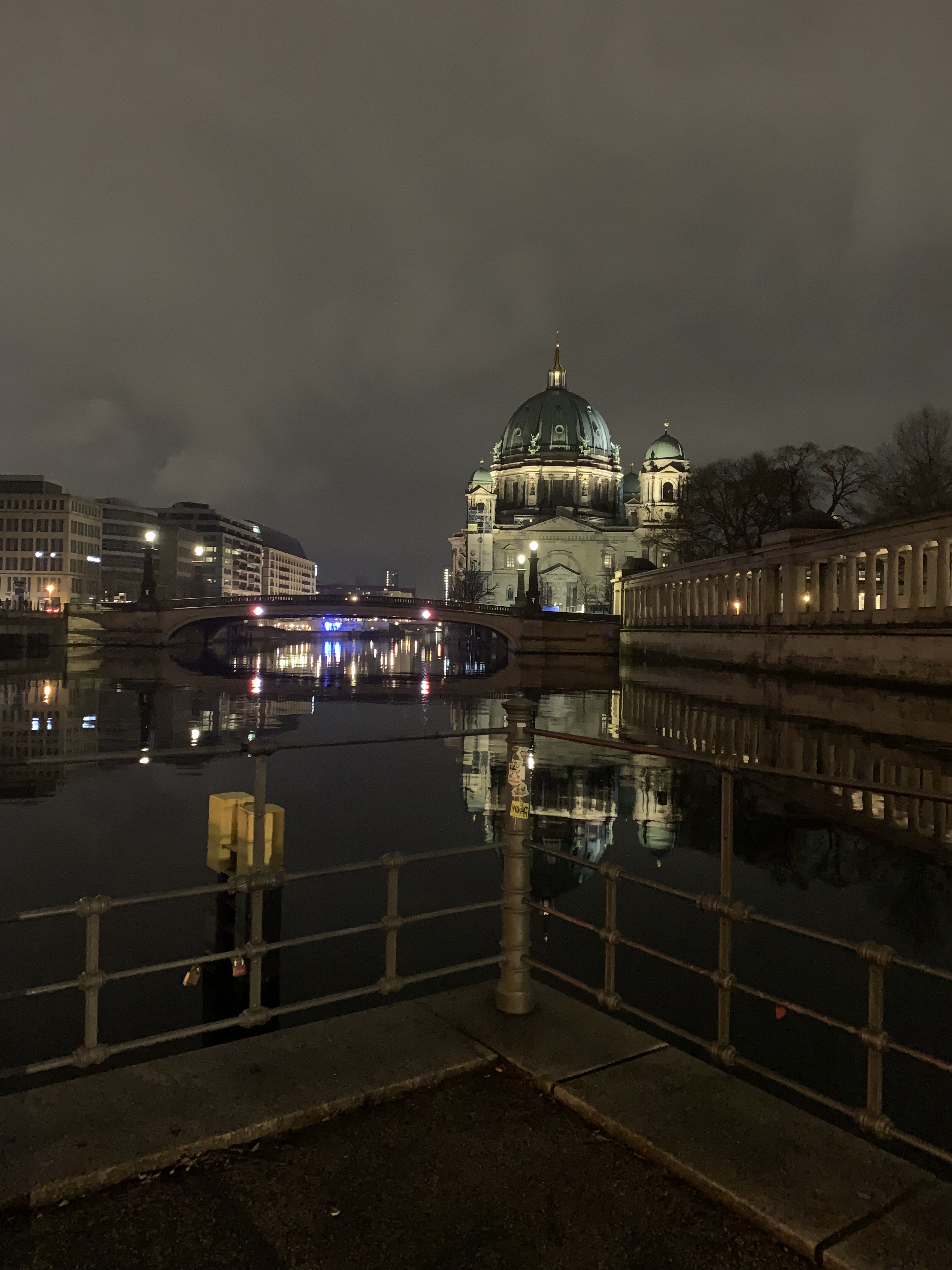
Berlin Cathedral
Berlin Cathedral is a monumental Protestant Church in Berlin. It is an impressive building and well worth a look. We didn’t go inside the Cathedral but, entry costs €10 with the additional option of a guided tour.

Berlin TV Tower & Alexanderplatz
The Berlin TV Tower, or the Fernsehturm, is the tallest building in all of Berlin. It was built by the German Democratic Republic (East Germany) as a symbol of power as well as a functioning TV transmission tower. The tower has now become an iconic picture of Berlin and is often used as a recognising landmark for the city.
Berlin TV Tower is located on Alexanderplatz which is a large square in the city. As well as being a major tourist spot, the area also hosts many shops and a train station. Named after the Russian Tsar Alexander I, the square is thought to be one of the most visited places in all of Berlin.
That wraps up all of the things that we saw and did during our two night stay in Berlin. Unlike when we visited Poland last year, I feel like we didn’t see everything that we could in Berlin. It is a huge city so that is understandable and, I feel satisfied that we got a taste of what the city has to offer. However, if we were to go back I would love to visit the Olympic Stadium, and visit more museums such as Franzosischer Dom or the DDR Museum.
I highly recommend a trip to Berlin! It was a great few days in the city and I feel as if we really immersed ourselves in the history which is so important.
Have you visited Berlin?
Amie x


 Explore with Amie
Leave a comment