
The Poland mini series is about to come to an end as I bring you the final of the three travel guides. This week the focus is on Krakow which is where myself and Alex ended our trip in January. Whenever I mentioned to people that we were going to Poland, the response was always: “oh, I’ve been to Krakow.” It is probably one of the most, if not the most, popular tourist location in the country. After being blown away by Gdansk and Warsaw, I was excited to see what Krakow had to offer.
Getting to the City
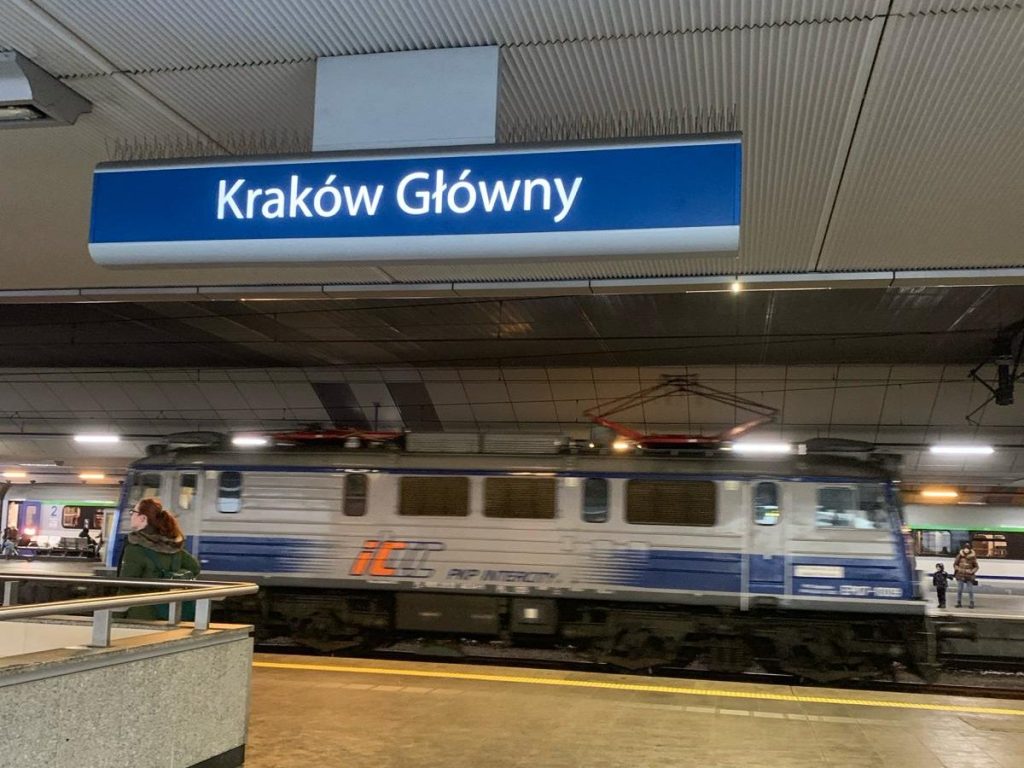
As I said above, our trip to Krakow was the final destination of a mini tour of Poland and therefore, we arrived at Krakow Glowny train station from Warsaw. You can get the train into Krakow from so many different locations: Berlin, Budapest, Prague, Paris, as well as other destinations within Poland including Lodz, Gdansk, Wroclaw and Poznan. Essentially, the possibilities are endless here. However, if you are flying into Krakow John Paul II International Airport, it is also extremely easy to get a train to the city. We had to get a train from the city to the airport for our departure. Krakow Lotnisko is the airport’s station and takes around 20 minutes or so. Krakow Glowny is located within a shopping centre but, its fairly easy to navigate with clear signage with icons for translation. You’ll be in the city centre in no time.
Sightseeing in Krakow
Most of your time during your trip to Krakow will be spent inside Old Town. The area was one of the first designated UNESCO World Heritage Sites in 1994 and is an incredibly historic area to explore. It used to be surrounded by walls and a moat however, most of the cities defences were torn down in the 19th century and the moat became the green area that surrounds Old Town. It is well worth having a walk around the outskirts of Old Town as you dip in and out of the area. It makes for a beautiful walk, especially in the snow.
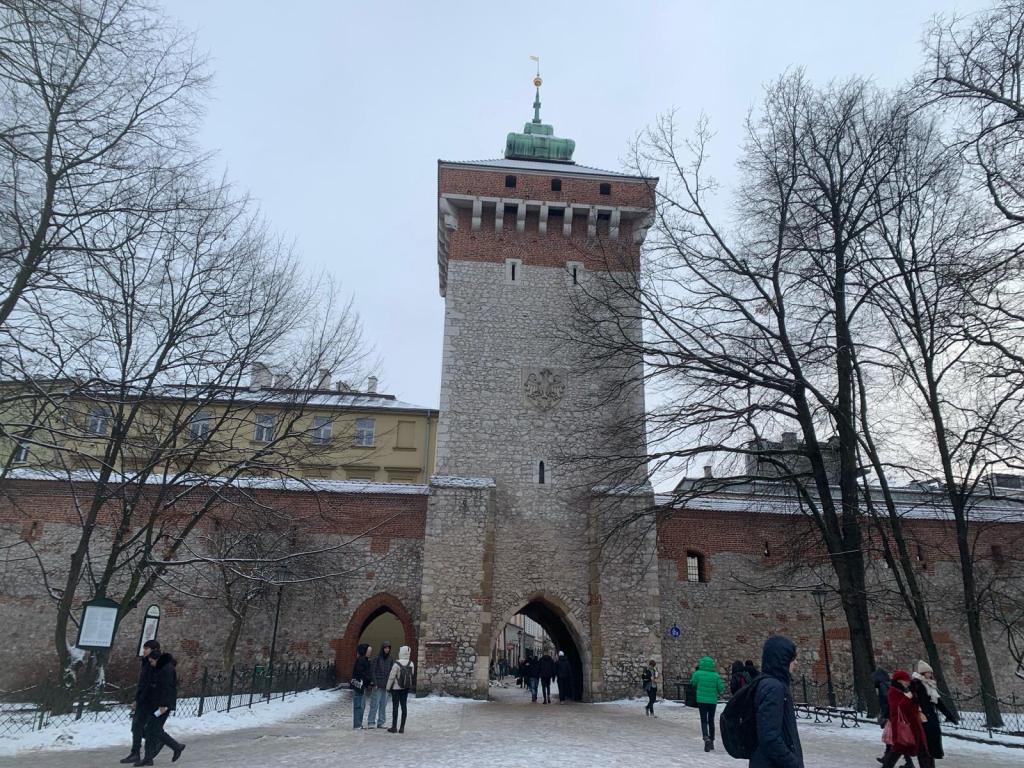
Krakow Barbican and St Florian’s Gate mark the entranceway into Old Town. The Barbican was part of the cities defences in the early 1400s and used to be part of the walls that surrounded it. However, nowadays it is part of the cities museums although, it was temporarily closed when we visited. St Florian’s Gate, on the other hand, remains open as a passage into Old Town. The gate dates back to the 14th century and was also part of the defences.
The central square within this area is known as Rynek Glowny and it really acts as a kind of tourist hub. Within this square there are many restaurants, cafes and attractions to look at.
Firstly, at the centre of the square is the MNK Sukiennice which is both a museum and an arcade market. If you’re looking for souvenirs from your trip then this is the place to go. I collect snow globes on my travels and this was where I made my purchase. There are, of course, many different tourist souvenir shops within the city but actually, despite the location, I found them to be the same price here as everywhere else. The same might not be said for all of the souvenirs though. Whilst you’re here, be sure to look up at the ceiling which is decorated with the crests of all the cities of Poland now and in the past.
A second museum in the are is the Rynek Podziemny which is an underground museum about the local history. Admission costs around 32 PLN which is around £6 although, entrance is free on Tuesdays. To have one day free admission seems to be a common feature of Polish museums so it is worth checking when you’re in the country to see if your trip overlaps with one of these days. Although, it is also worth noting that the museum does close early on Tuesdays as well.
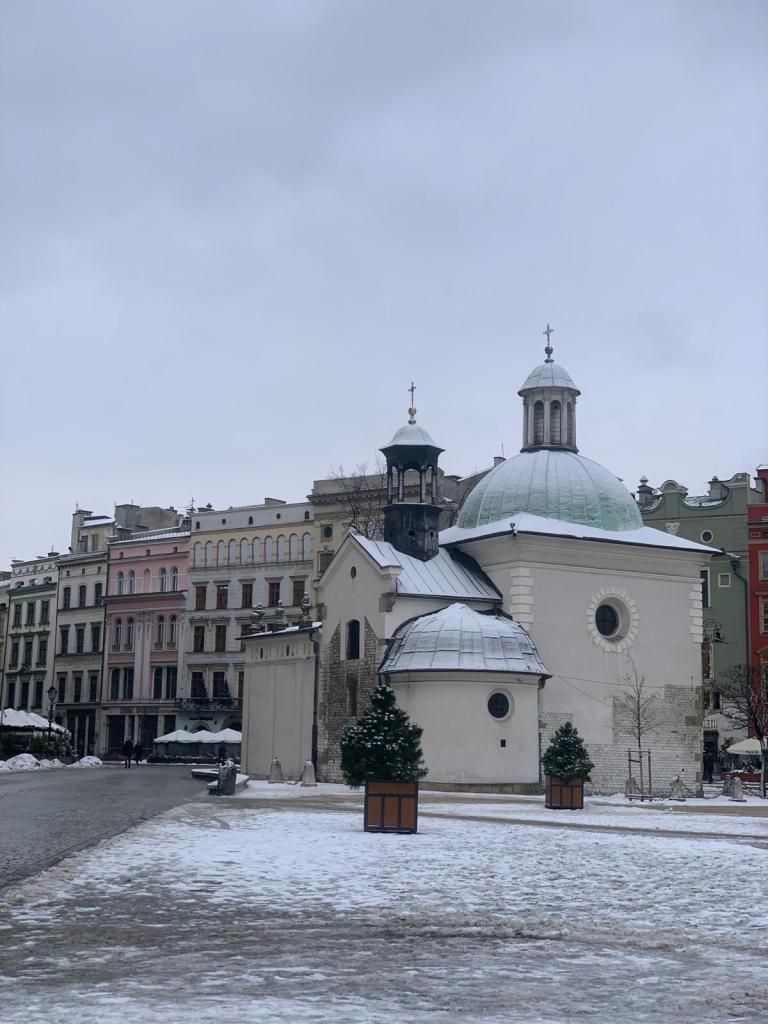
The Church of St. Wojciech can also be found within this square. It is a Romanesque church that was built in the 11th century. Its roof has a very distinctive green dome design that was influenced by Baroque architecture, made famous in Italy. This was added to the church in the 17th century and it underwent further restoration in the 1800s. The church is free to enter.

However, perhaps the most distinctive feature of Rynek Glowny is the St Mary’s Basilica which is a Catholic Church with a gothic tower. The church was built in the 14th century although, its foundations date back further to the 13th century. The church still operates as a place of religion so tourists are only allowed to enter from 11:30 until 6pm when Mass is not being conducted (with the exception of special religious holidays). Admission costs 15 PLN with children under 8 able to enter for free. Every hour a trumpet player appears at one of the windows in a tradition that started to alert the city to an invasion. There was an incident when the trumpeter was shot with an arrow during a battle and therefore, the warning ended abruptly. This abrupt ending is replicated in the hourly concerts today.
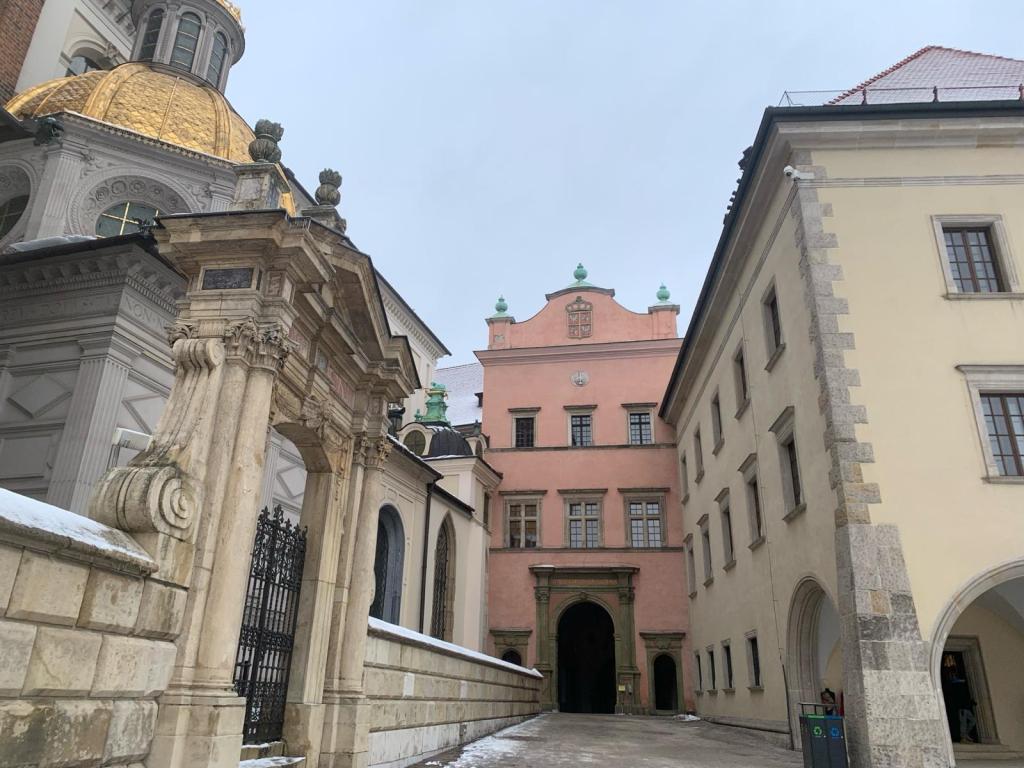
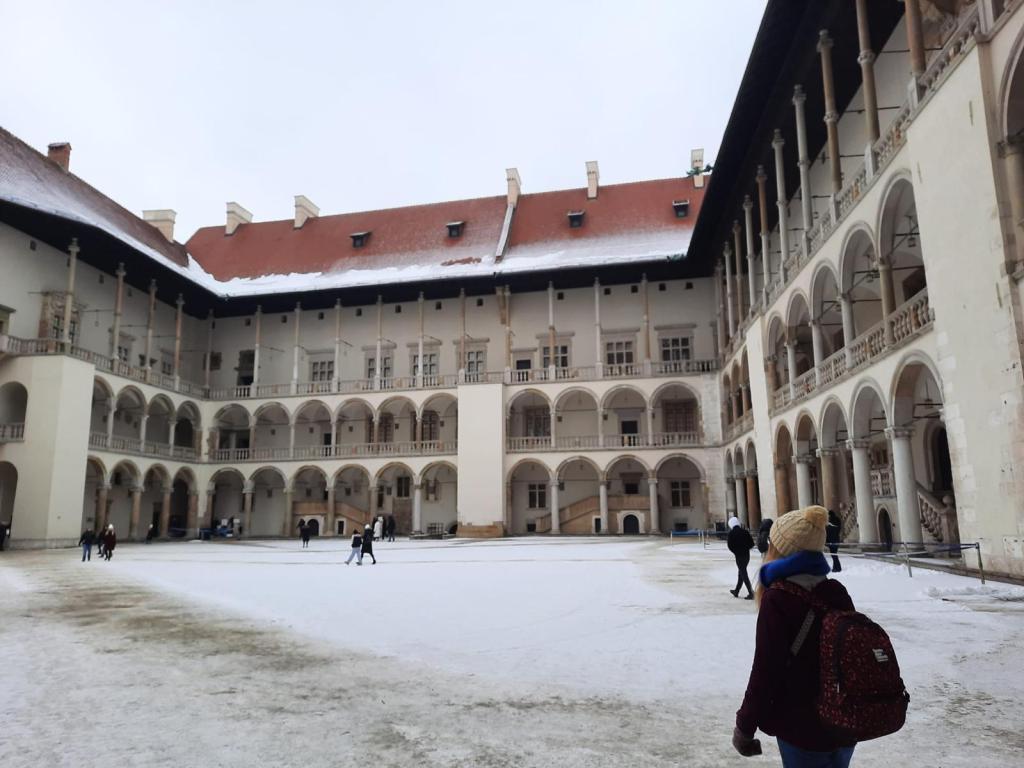
Just outside of the main area of Old Town is the Wawel Royal Castle which overlooks the city. This fortified hilltop castle has undergone many changes and restorations since a castle was first built on the site in the 11th century. The remains of the earliest iteration of the castle can be viewed in the northern wing today. Wawel used to be an important part of the political and administrative state of Poland however, now the castle acts as a place of exhibition and a museum. Certain areas of the castle grounds are free to enter however, the museum itself costs 35 PLN except on Mondays – this museum’s free day. It is worth heading up there even if you aren’t planning on going into the museum as you do get a nice view across the city from this vantage point.
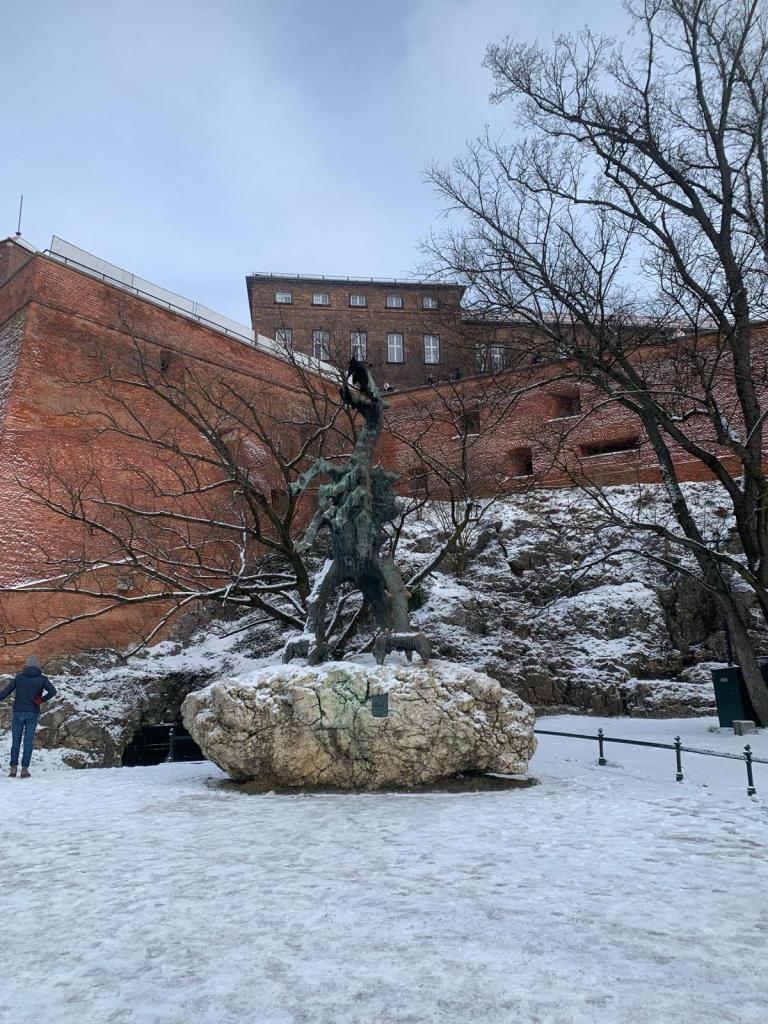
Just below the castle, on the banks of the river, is the Wawel Dragon which is a sculpture that breathes fire. Yes, it is in fact a dragon that literally breathes fire. The legend states that the Wawel Dragon terrorised the inhabitants of the city during King Krak’s reign. The dragon was ultimately defeated when a ram filled with sulphur was placed outside his den. The dragon took the bait and ate the ram hide and the gases the sulphur produced caused the dragon to explode. To commemorate the destruction of the dragon, a statue was built near the dragon’s den at the bottom of Wawel Hill.
As well as Old Town, I think it is important to look at the Jewish Quarter in Krakow to learn more about the history of the city. Jewish Square as well as many of the cities Synagoga are located towards the river and are a must see. There are many trails around the streets here that you can take which are clearly signposted. We opted to take the red route but, it really is just a case of walking around the streets and finding interesting spots. The Remuh Synagogue is one of the oldest in the city, dating back to the 16th century. Whilst the Stara Synagoga is now a museum of Krakow Jewish culture and history.

On the other side of the river, there is also the Jewish Ghetto Memorial which is a series of black chairs on Bohaterow Getta Square. The chairs are a memorial to the abandoned Ghetto as the Jewish people were either killed or taken to Auschwitz, Plaszow or Blezec. They are supposed to recall the abandoned household objects left behind. However, the memorial has been criticised for the design being difficult to understand as there is not much information at the site about its meaning. Each of the thirty three chairs represents a thousand lives and, if you go with that fact in mind, the memorial becomes much more stark and horrifying. You can also visit the remains of the Ghetto Wall not far from this spot.

We walked to the Jewish Memorial and Ghetto Wall via a lovely park called Park im. Wojciecha Bednarskiego w Podgorzu which, although not one of the typical sightseeing spots within the city, was a lovely place for a walk and we got to explore some more local areas of the city. It’s always nice to see where people actually are living their lives in a city as opposed to just the tourist spots. The square in the Old Town is the centre for tourism in Krakow especially. There is also a monument near the park that commemorates Poland regaining independence.
All of these sites within the city highlight its historic nature. There is much more to Krakow than a city weekend break to do some drinking as seems to be part of the culture. Of course, contributing to the local economy is great but, make sure you really explore the city and its history at the same time.
Outside of Krakow
The main two sites to visit outside of Krakow are a train ride away.

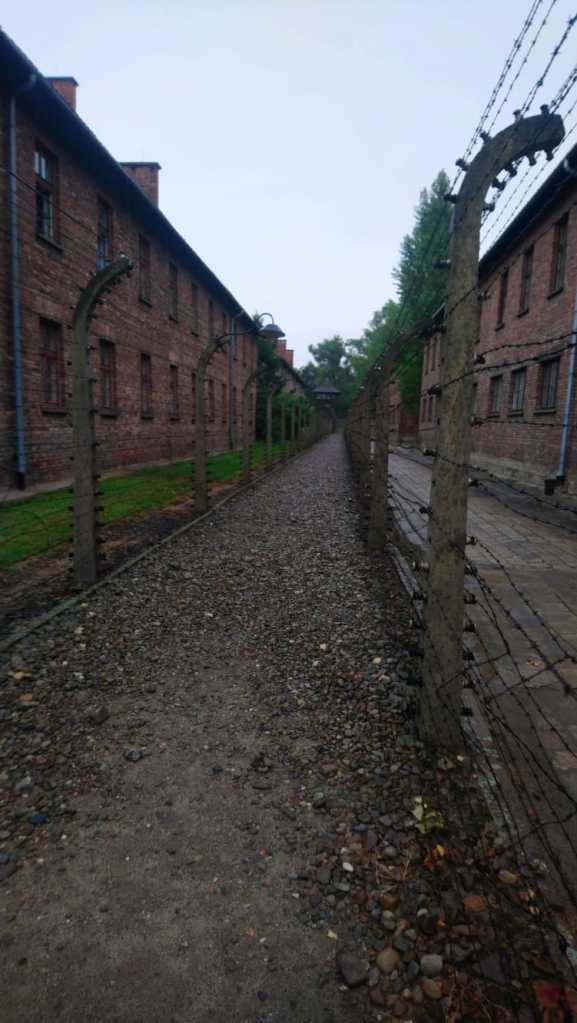
First of all is Auschwitz which is located in Oświęcim about 66km outside of Krakow. The train takes around 1 and a half hours from Krakow Glowny to Oswiecim and they go fairly frequently so this shouldn’t be an issue. From the train station, the gates to Auschwitz are a 25 minutes walk away though there is the option to take the bus if you prefer. Auschwitz was a concentration camp in WW2 when the Nazi’s took over Poland. It is believed that over 1 million people were killed during the camps duration. Although a lot of the site was destroyed, it has been rebuilt as a museum and tours are available in many European languages. There is the option for a full day 6 hour tour or a general tour lasting approximately 2 and a half hours. The latter costs around 110 zloty.

The second option for a day trip is to visit the Wieliczka Salt Mine which we opted to do on our most recent visit to Poland. The Salt Mine, like the city of Krakow, was one of the first UNESCO Heritage Sites. In the 13th century, Wieliczeka was known as the largest source of salt in Poland and became crucial to the economy throughout history. The website states that over 700 years, 26 shafts were struck in Wieliczka and 9 million m³ of post-excavation voids were drilled and as a tourist you can visit some of these chambers.
The tourist route allows you to walk around the mine with a guide and see some of the most impressive areas of the mine, including huge chambers and salt lakes beneath the surface. This was a really interesting experience as it was highly informative about the history of the mine and very impressive to look at. You also have the option of the Miner’s Route which involves getting into a hardhat and taking on the role of a miner for yourself! Like with Aushwitz, the tours are available in many different languages and well worth the 122 zloty price tag. It is worth noting that the Miner’s Route is only available in English and Polish.
To get to the salt mine, it is a quick and easy train from Krakow Glowny to Wieliczka where the mine is clearly signposted. This was a great morning out to start our trip to Krakow and I was pleasantly surprised with how much we enjoyed it!
Have you been to Krakow? How will you be spending your trip?
Amie x


 Explore with Amie
Leave a comment