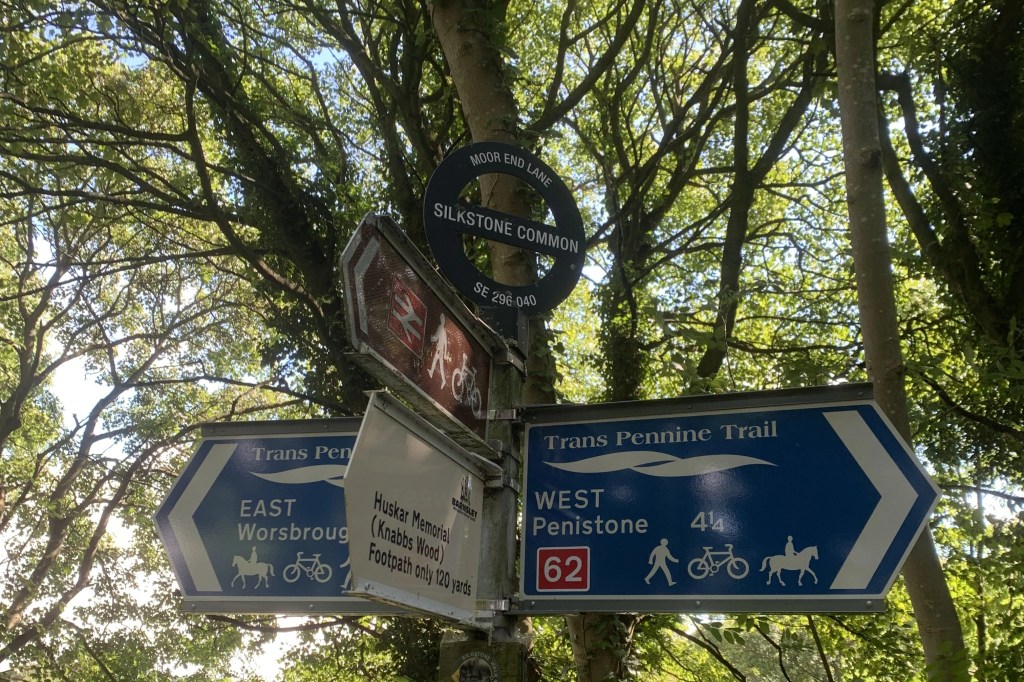
The Trans Pennine is a long-distance route that runs throughout the North of England. It spans from Southport to Hull with offshoots to Leeds, York and Chesterfield, connecting a large part of the region. The path is multi-purpose for cycling, riding and walking and, from my experience, is very well maintained. Most of the path is also on old railway lines and is pretty flat, a big perk when cycling. Alongside the path, you get a real insight into the history of the places and today, I’m sharing with you a cycle route that I did recently that looks at the rich mining and industrial history of South Yorkshire.
To give you a brief overview, South Yorkshire has a long mining history dating back to Roman times. However, in the 19th century, the industry boom lead to many coal mines within the region. Coal mining was a dangerous industry and there were many disasters and incidents. In fact, South Yorkshire Coalfield had the worst mining disaster in terms of fatalities in England, The Oaks explosion1. However, it was the main industry in the area and a lot of families relied on the mines for their livelihood, including my own.
Difficulty: Easy
Distance: 42.3km
Elevation: +437metres
OS Explorer: OL 278
Notable Features: Huskar Memorial, Penistone Turntable, Silkstone Tunnels, Thurgoland Tunnel, Elsecar Heritage Centre
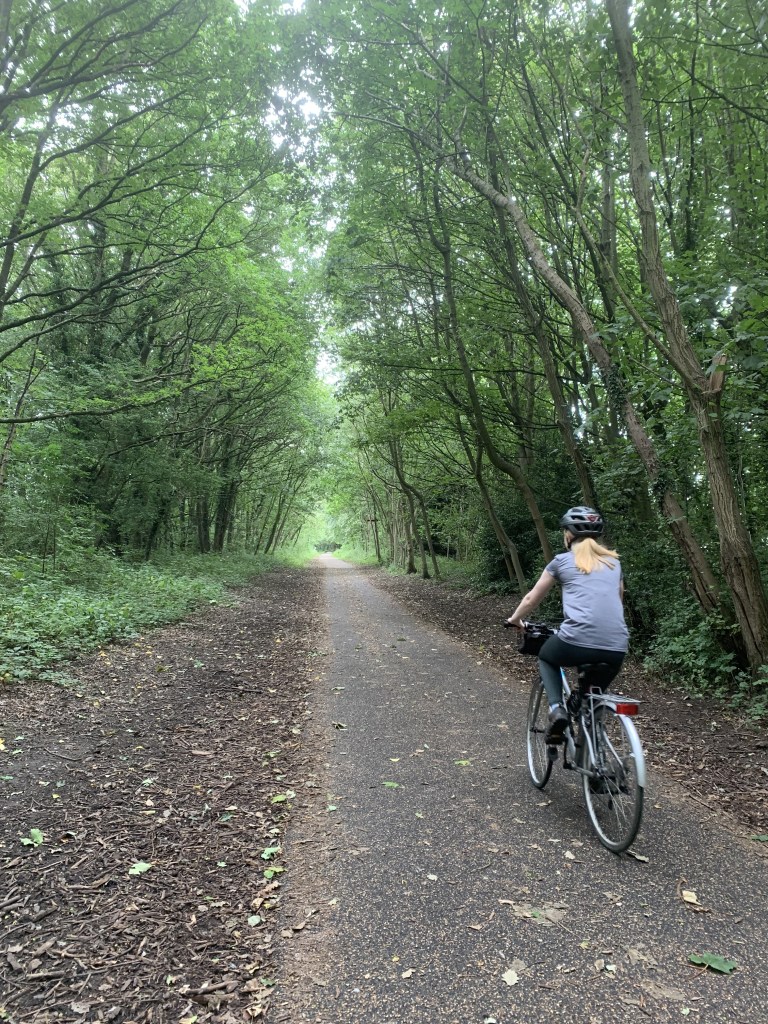
In the 1980’s, strikes were called to attempt to stop the collieries from closing. The strikes began in March 1984 in Yorkshire at Cortonwood Colliery (you’ll see the old site on this cycle!) and led to a time of much upheaval in the area as not all agreed with the NUM’s (National Union of Miners) decision to call a strike. The strike was also ruled as illegal because no national vote had been called amongst the NUM members2. This was a big win for Margaret Thatcher’s government and the strikes ended in March 1985, a full year later. It was the beginning of the end for the coal mines as the industry was privatised in 1994. By the end of 2015, all 175 working pits in Britain had closed3. This led to high unemployment and poverty in areas of Yorkshire, with Grimethorpe in South Yorkshire thought to be the poorest area in the country. To learn more about the history of this area, I would really recommend watching the film Brassed Off, staring Ewan McGregor, which tells the story very well.
That is just a brief overview of the mining history of South Yorkshire and gives you context to some of the notable features of the cycle route. The route begins in a town in Barnsley called Wombwell which is a good starting point for a circular route around this area. There are a couple of car parks available in the town centre or, you can park almost right next to the Trans Pennine Trail in Netherwood Academy’s car park. This would be a good option in out-of-school hours but perhaps not on weekdays as the area will get busy. However, you have many options for this route. You could start from any of the places in the Barnsley area or at Penistone which was our turn back point. Do whatever is easiest for you!
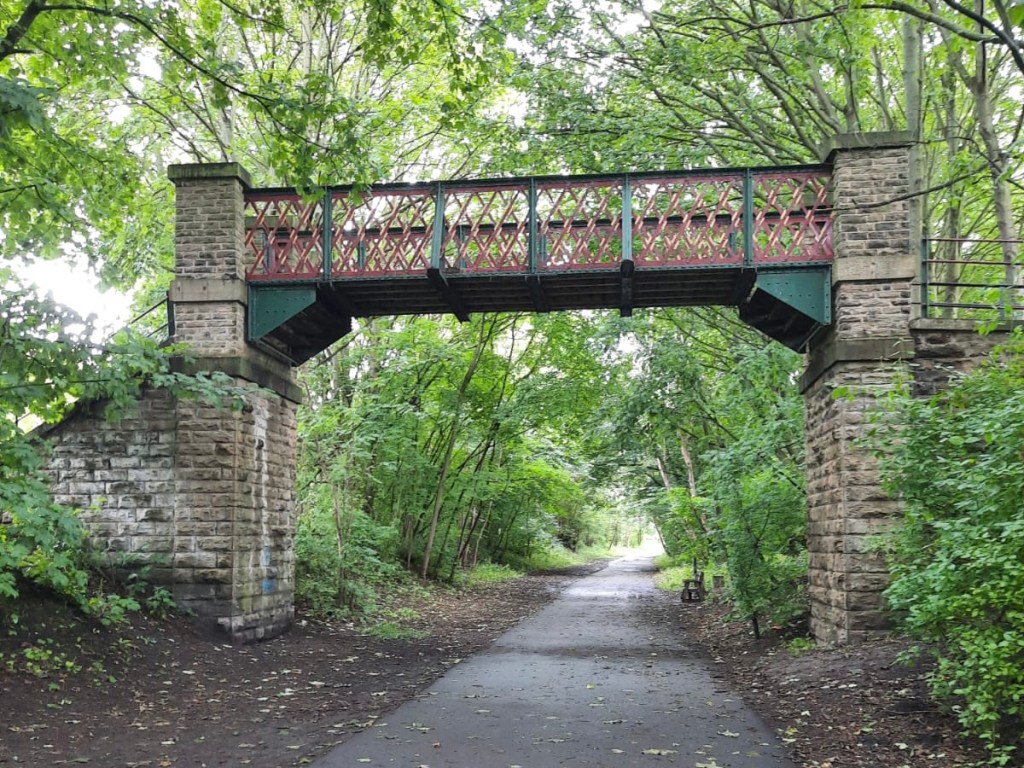
The first notable sight on this list is the Railway Footbridge near Worsborough Reservoir. It is clear that the Trans Pennine used to be a railway line here and mainly is just a pretty and historic piece of infrastructure. Shortly after the bridge, Wigfield Farm will be on your right. This is an affordable, small farm that I believe I have visited once before as a child. I would highly recommend stopping here for a sausage roll. We did this and it was delicious and just what you need on a day out like this. They also have other options for snacks and drinks too.
Now the next stop on our list was the New Sovereign Colliery which is the leftover structure from one of the mines in the area. Unfortunately, this turned out to be on private land and therefore, we couldn’t explore any further. There are some pictures on google but, as far as we understood it, it is not actually accessible from the Trans Pennine Trail. There are some other opportunities to see old mining infrastructure within the South Yorkshire area that I will explore in upcoming posts so, do look out for those.
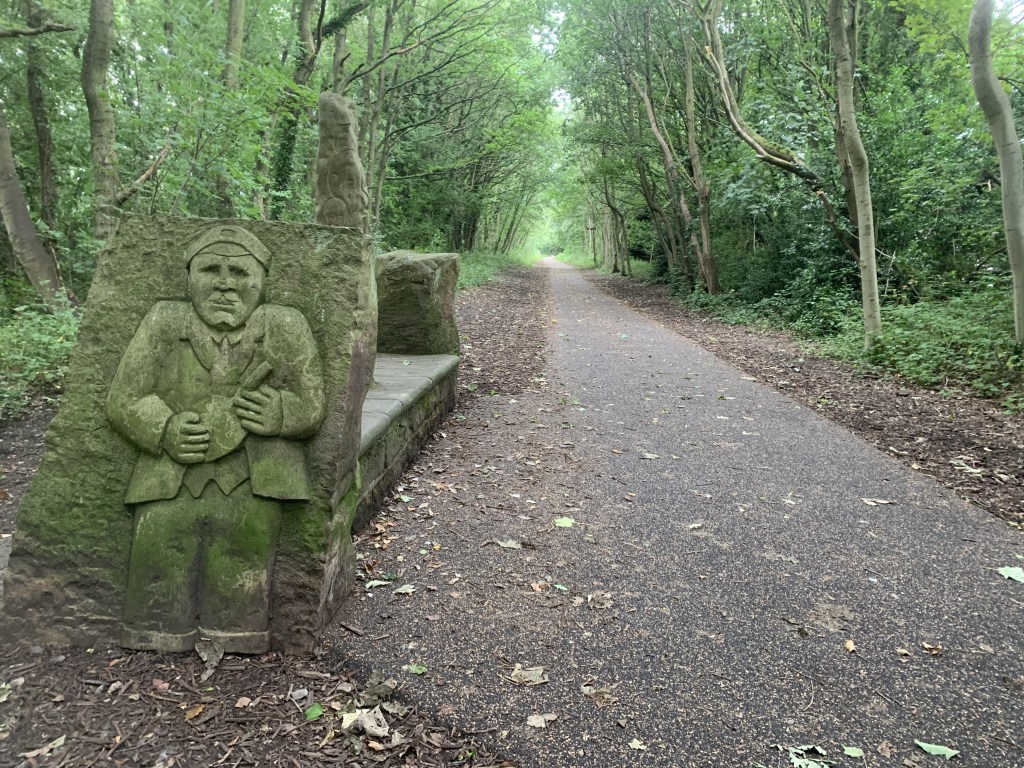
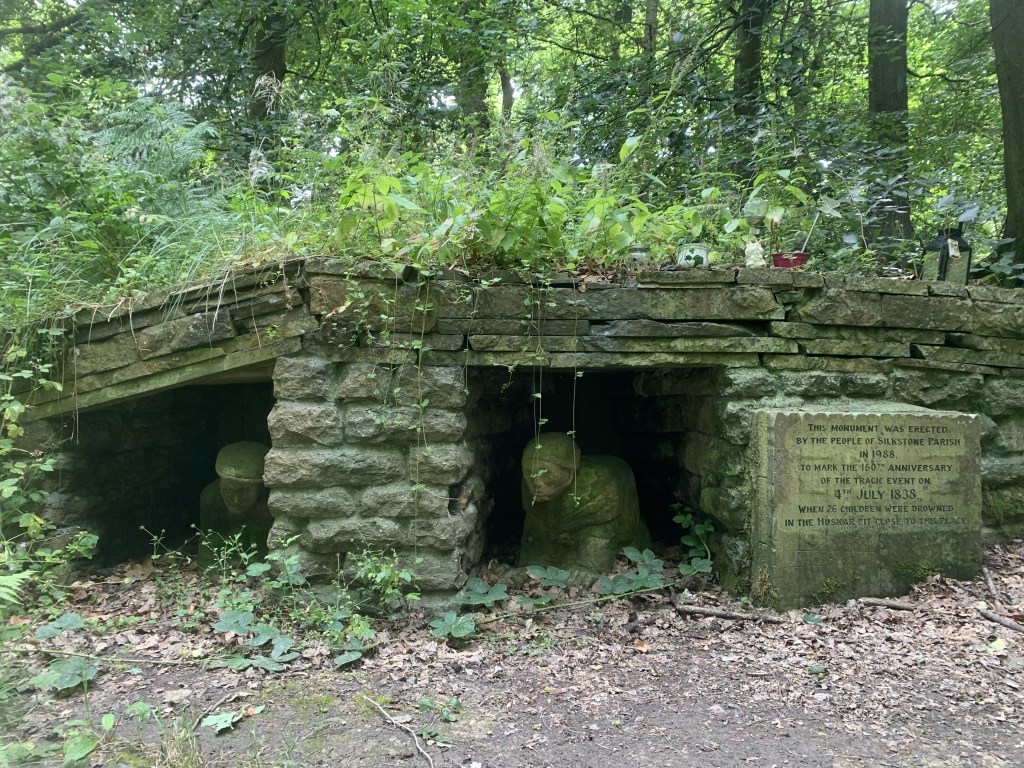
As you arrive in Silkstone Common, there are two mining memorials to see. The first is a bench which is a sculpture of two men with mining equipment. There is also an information board at the site to give you more details about the history of Silkstone Common specifically. The second memorial has a tragic backstory. To see this one, you must leave the Trans Pennine Trail slightly and head across the road and into the woodland area (Knabbs Wood). The Huskar Memorial is a tribute to the 26 children that drowned when Huskar Pit flooded in 1838. This incident lead to more legislation being put in place and boys under the age of 10 and all girls were banned from working underground.
As well as the tunnels along the route, there is also a railway turntable as you approach Penistone. Though they are not entirely sure when this was built, it is believed to be from the Victorian era. It was used from that time until the 1980s as a way of turning locomotives around. According to signage in the area, it was thought that only two men would be required to turn 100 tonnes of train because of how well balanced the turntable was. There is also another structure to look out for here: a WW2 Tank Ramp. We had our lunch here too after buying a meal deal from Tesco in Penistone. You can visit these locations before or after heading into Penistone as you do have to go back on yourself a little bit on this route.
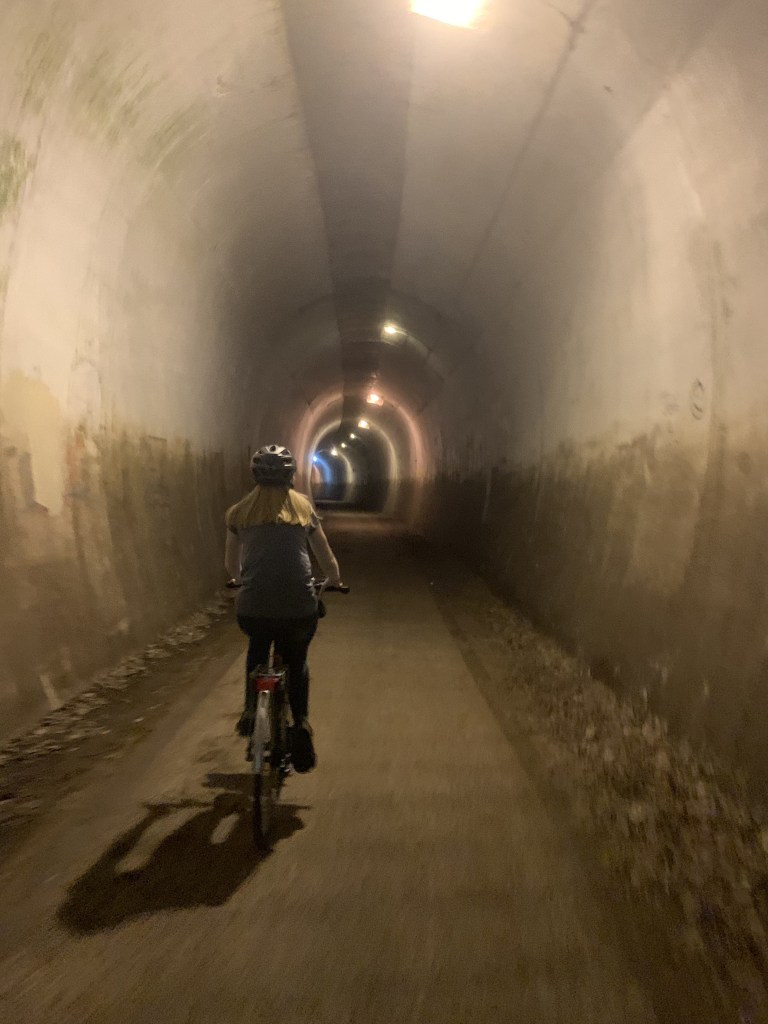
One of the main highlights of the return cycle is the Thurgoland Tunnel. This is an abandoned railway tunnel that now makes up the Trans Pennine Trail. It is a fairly long tunnel at over 200 metres and was originally opened in 1845 for the Manchester Store Street to Sheffield train. However, it was no longer used for trains from 1983 when the train from Sheffield to Huddersfield was diverted to Barnsley.
Finally, towards the latter end of the cycle, you pass through Elsecar Heritage Centre. This is a lovely historic spot that is now a visitor’s centre with small independent shops, cafe’s and antique stores. It is well worth a stop here if you have the time. Also, as I mentioned earlier, the trail goes past Cortonwood Shopping Centre which is built on the old Cortonwood Colliery where the mining strike began.
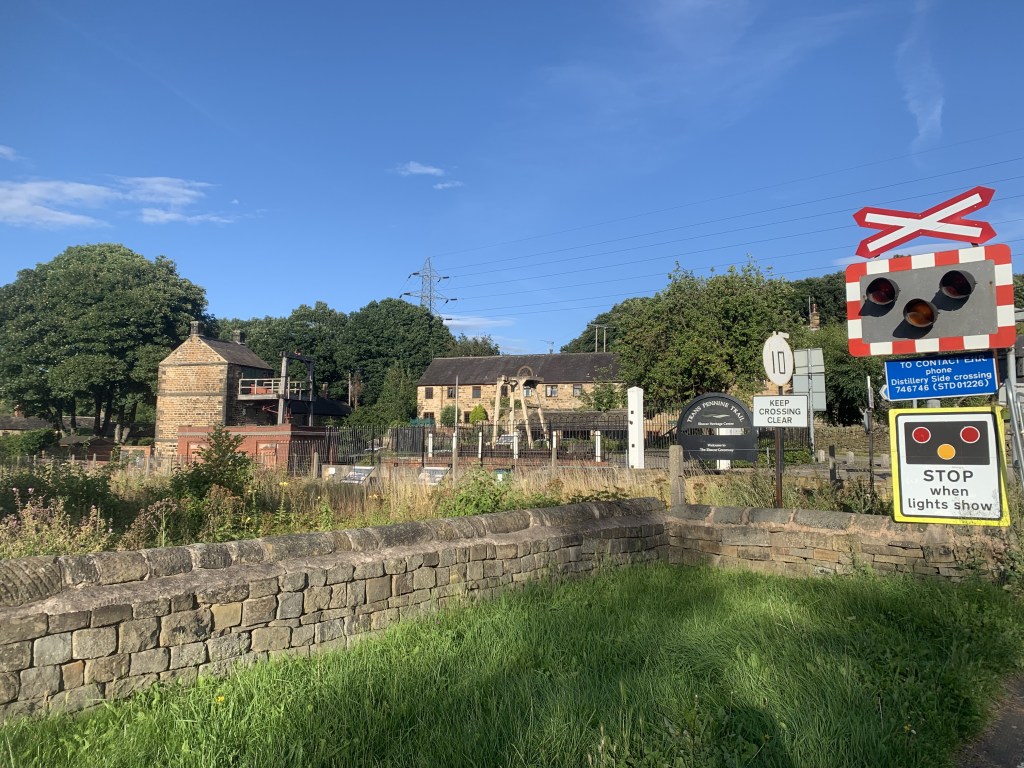
As you can see, the Trans Pennine Trail and this area in particular, is steeped with history of both the railways and the coal mines. I would really recommend giving this cycle route a go as it isn’t too strenuous being mainly flat. It is a full day cycle though so be sure to pack snacks! Check out the full route for yourself HERE.
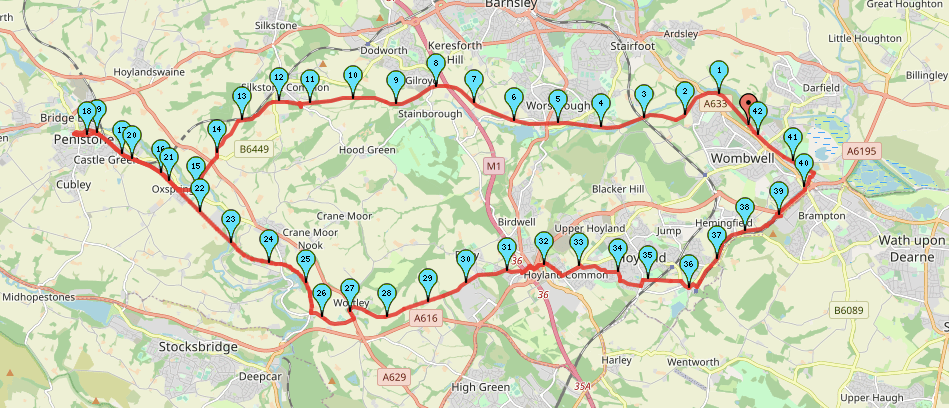


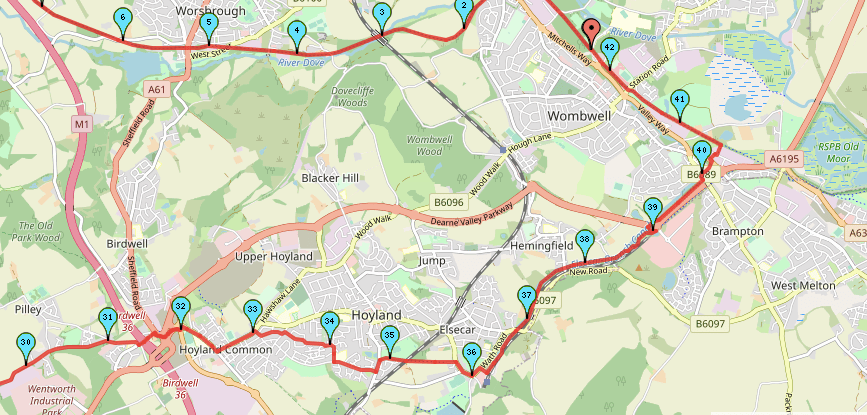
The step by step for this route is fairly simple:
Start Point: Wombwell
- Join the Trans Pennine Trail near Netherwood Academy towards Barnsley.
- At the fork, take the path on the left towards Worsborough.
- Shortly afterwards, follow the path to the right following signposts for Silkstone Common
- Continue straight over any paths or roads you meet.
- Just past the memorial bench, you will reach a bridge. Leave the Trans Pennine here, turn left and head across the road into Knabbs Wood to see the Huskar Memorial.
- Return to the Trans Pennine Trail and continue along the route.
- When the trail ends at a road, turn left down Maggot Lane.
- Eventually, the lane meets a main road. Turn right.
- At the crossroads, continue straight down the hill and take the next third road on your right: Roughbirchworth Lane.
- Continue down this lane when it meets the main road by going left then right in a short dogleg.
- A footpath on the right returns to the Trans Pennine Trail. There are some steps here so you will have to get off your bike.
- At the trail, turn right and cycle into Penistone.
- Cycle past the train station and leave the path at the next opportunity on the left: Eastfield Avenue.
- Head right to the main road and then left at the main road to the centre of Penistone.
- For the return route, head back to the path the same way.
- Don’t leave the trail where you joined it previously, continue straight towards Thurgoland.
- Continue along the path over two roads. When you reach the third, follow Finkle Street Lane to the left. This road heads uphill.
- When you reach the main road, turn left and continue past the pub and church.
- On the second corner, take the road on the right, It should meet a footpath signposted Wortley Hall.
- When this reaches the road, continue left down Carr Lane.
- Follow this road straight down until you reach the bridge over the M1 on your left, go over the bridge.
- Head over the crossings around the roundabout towards Hoyland Common.
- Cycle down Sheffield Road, turning left at the crossroads.
- Take the right at the Police Station and wiggle through the housing estate. This is signposted and pass Hoyland Springwood Primary School.
- After the primary school, turn left onto Clough Fields Road.
- When you reach the end of the road, turn left to Milton and then right when you reach the park.
- Continue straight down the path – this is a little uneven so be careful if you have a road bike.
- When you read the road, turn right into Elsecar and follow the road around to the left. Elsecar Heritage Centre will be on your right. Leave the road here.
- Follow the Trans Pennine Trail out of the Heritage Centre and towards Wombwell.
- Follow the signposts past Cortonwood Shopping Centre. Head under the bridge at the end of the canal and continue to follow the trial across the roads.
- When you reach the junction of the Trans Pennine, head left back towards Netherwood Academy.
End Point: Wombwell
I hope this was helpful. Look out for more posts about England’s industrial heritage soon!
Amie x
1https://www.godsowncounty.co.uk/yorkshire/coal-mining-history-in-yorkshire/
2http://news.bbc.co.uk/onthisday/hi/dates/stories/september/28/newsid_2540000/2540813.stm
3https://www.bbc.co.uk/news/uk-england-york-north-yorkshire-35803048
 Explore with Amie
Leave a comment